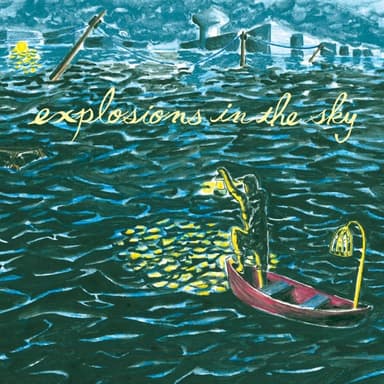
Catastrophe and the Cure
Explosions in the Sky
If the previous track is rain arriving slowly, this one arrives already in full storm. It opens mid-motion, guitars already locked into a driving, slightly frantic riff that pushes forward with a restlessness the band rarely showed before this record. The tempo sits at a brisk walking pace but the energy is closer to running — there is urgency in the picking patterns, in the way the rhythm guitar keeps pressing against the beat rather than sitting comfortably inside it. The emotional texture is not dark exactly, but it is tense: the feeling of someone moving through difficulty with too much determination to stop and feel it fully. When the guitars diverge into their upper-register melodic lines, there is a quality almost like relief, like surfacing from water, but the song doesn't let you rest there — it pulls back into the forward motion almost immediately. This is the most kinetic piece on the record, the one that plays well at volume through speakers rather than headphones, the one that would soundtrack a montage of someone driving fast on an empty highway with no particular destination, choosing motion over stillness because stillness would mean confronting something too large. It belongs in a tradition of instrumental rock that treats urgency itself as an emotional subject, where the feeling isn't located in any single moment but in the relentless fact of momentum.
fast
2000s
kinetic, tense, bright
American, Texas
Post-Rock, Instrumental. Texas Post-Rock.
anxious, defiant. Opens already in full forward momentum, offers brief upper-register melodic relief like surfacing from water, then immediately pulls back into relentless urgency..
energy 8. fast. danceability 4. valence 6.
vocals: instrumental, no vocals.
production: driving rhythm guitar, tremolo-picked melodies, full locked-in band, physical low-mid pressure.
texture: kinetic, tense, bright. acousticness 3.
era: 2000s. American, Texas.
Driving fast on an empty highway with no destination, choosing motion over stillness because stopping would mean confronting something too large.