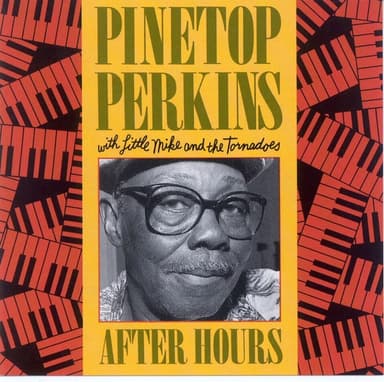
After Hours
Pinetop Perkins
Pinetop Perkins sits at the piano like a man who has nowhere else to be and no reason to hurry. "After Hours" unfolds at a pace that isn't slow so much as deliberate — each note given room to breathe, to decay, to mean something before the next one arrives. The left hand walks a steady bass pattern while the right traces melodic phrases that feel conversational, almost confessional, in their quiet intimacy. There's a late-night quality to the production, a sense of empty space around the instrument, as if the room itself has grown still in respect. Perkins plays with the economy of someone who learned that restraint is its own form of eloquence — no showboating runs, no gratuitous ornamentation, just the essential notes delivered with impeccable timing and a touch that is simultaneously light and weighted with history. The emotional register is bittersweet rather than despairing: the blues of reflection, not crisis. You can feel the hours in it, the accumulated weight of a long life lived in proximity to this music. This is the song that plays in the small hours after the crowd has thinned and only the devoted remain, nursing whatever is left in their glasses, grateful for the silence between notes.
slow
1970s
sparse, intimate, warm
Chicago blues / Mississippi Delta roots
Blues. Piano Blues.
bittersweet, reflective. Unfolds with unhurried deliberateness from contemplative quiet to a bittersweet reckoning with accumulated time, finding eloquence entirely in restraint..
energy 2. slow. danceability 2. valence 4.
vocals: instrumental — solo piano voices emotion without words.
production: solo piano, sparse late-night arrangement, space used as structural element.
texture: sparse, intimate, warm. acousticness 9.
era: 1970s. Chicago blues / Mississippi Delta roots.
The small hours after the crowd has thinned and only the devoted remain, nursing what's left in their glasses, grateful for the silence between notes.