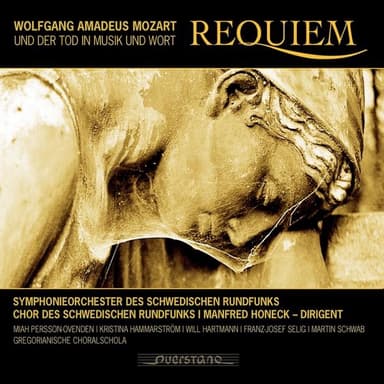
Requiem: Lacrimosa
Wolfgang Amadeus Mozart
This setting of the sequence from the Catholic Mass for the Dead unfolds at a tempo that feels like breathing slowing toward stillness. The orchestration is predominantly dark — strings weighted toward the low register, woodwinds entering with the restraint of people trying not to disturb something — while the chorus moves in waves, phrases beginning softly and swelling before receding again. The soprano soloist arrives against this texture like a single light source, the voice high and exposed in a way that emphasizes vulnerability rather than power. Mozart left the Requiem unfinished at his death, and there is something inseparable about that biographical fact and the emotional character of the piece — it carries a quality of incompleteness that no completion by later composers fully resolves. The Lacrimosa specifically is among the most condensed emotional experiences in the classical canon: a short movement that covers enormous ground, from grief so heavy it can barely sustain its own forward motion to a final cadence that settles rather than resolves. It suits late nights, the particular quiet that follows a long cry, or any moment when someone needs music that does not try to reframe sadness as something else.
very slow
1790s
dark, solemn, intimate
Austrian Classical
Classical, Classical period. Requiem / Sacred choral.
melancholic, mournful. Breathes at a slowing tempo of weighted grief, swells and recedes in wave-like phrases, then settles into a final cadence that resolves without ever fully resolving..
energy 2. very slow. danceability 1. valence 1.
vocals: mixed chorus with exposed soprano soloist, vulnerable, restrained, grief-weighted.
production: chamber orchestra with choir, dark low strings, spare woodwinds, no ornamentation.
texture: dark, solemn, intimate. acousticness 7.
era: 1790s. Austrian Classical.
Late night in the particular quiet that follows a long cry, when you need music that does not try to reframe sadness as anything else.