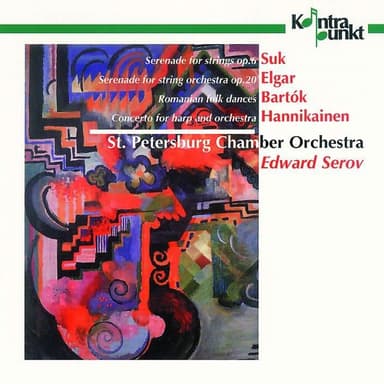
Romanian Folk Dances
Béla Bartók
Bartók distilled the raw pulse of Transylvanian village music into six miniature movements that feel simultaneously ancient and unsettling. The opening "Stick Dance" arrives blunt and percussive, the piano hammering asymmetric rhythms with a peasant stubbornness that refuses to resolve into anything comfortable. What follows is a journey through firelit courtyards and harvest fields — modal scales that bend away from Western harmony, drone basses that hum like a bowed fiddle, sudden dynamic lurches from a whisper to a fist. The middle movements breathe with a haunting lyricism, melodies that spiral and double back on themselves like folk singers embellishing a repeated verse. Then the final dances accelerate into something almost violent, the pianist's left hand locked in an obsessive rhythmic engine while the right hand dances wildly above it. This is not concert-hall prettiness — Bartók collected these tunes from actual Romanian peasants with a phonograph in the early 1900s, and the earthy, sweated origins never fully wash off. You feel the stamping of boots on packed earth, the scrape of a fiddle bow, the collective body memory of a culture that predates polished conservatory music by centuries. Reach for this on a gray afternoon when you want music that is both intellectually rigorous and viscerally alive — something that reminds you that the line between folk tradition and modernist composition is thinner than concert programs suggest.
fast
1900s
raw, earthy, percussive
Romanian / Transylvanian folk tradition, Hungarian composer
Classical. Contemporary Classical / Folk-Influenced Piano.
unsettling, visceral. Opens with blunt, percussive stubbornness, breathes into haunting lyricism in the middle, then accelerates into something almost violent by the final dances..
energy 7. fast. danceability 5. valence 4.
vocals: instrumental, no vocals.
production: solo piano, asymmetric rhythms, modal scales, drone bass.
texture: raw, earthy, percussive. acousticness 9.
era: 1900s. Romanian / Transylvanian folk tradition, Hungarian composer.
A gray afternoon when you want music that is both intellectually rigorous and viscerally alive.