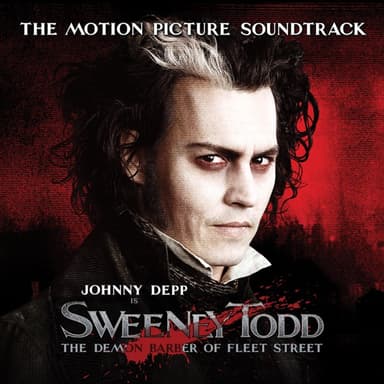
Johanna
Sweeney Todd
The melody arrives quietly, almost conversationally, carried on a simple piano line with none of the gothic grandeur you might expect from Stephen Sondheim's darkest musical. "Johanna" in Sweeney Todd exists in multiple versions — the Judge's obsessive, corrupted version and Sweeney's desperate, mourning version — but in either form the song operates as a kind of sustained haunting. The orchestration is chamber-small, intimate in a way that makes the emotional content more disturbing rather than less. Sondheim wrote melodies that seem to loop back on themselves, phrases that don't resolve when they should, creating unease underneath words that are ostensibly tender. Vocally the song requires something unusual: the ability to sound genuinely loving while the context poisons every syllable. In Sweeney's mouth it becomes a father's grief so calcified it has transformed into something consuming and dangerous; in the Judge's it reveals obsession masquerading as devotion. That ambiguity — the way the same beautiful tune holds such different darkness depending on who's singing it — is a Sondheim signature, using musical beauty as a kind of moral trap. The show premiered in 1979 and redefined what a musical could be, blending grand opera ambition with penny-dreadful horror. You reach for this late at night when you want music that sits with contradiction rather than resolving it — beauty and dread sharing the same four bars, neither one winning.
slow
1970s
intimate, unsettling, delicate
American musical theatre, grand opera ambition, Victorian penny-dreadful source
Musical Theatre, Classical. Chamber Musical.
melancholic, anxious. Begins in deceptively tender intimacy and slowly reveals darkness underneath — looping unresolved phrases create sustained dread beneath loving words, neither beauty nor menace winning..
energy 2. slow. danceability 1. valence 3.
vocals: baritone, intimate and tender on the surface, nuanced enough to hold grief or obsession in the same phrase.
production: chamber orchestra, minimal piano, sparse and intimate, Sondheim's harmonically restless writing.
texture: intimate, unsettling, delicate. acousticness 7.
era: 1970s. American musical theatre, grand opera ambition, Victorian penny-dreadful source.
Late at night when you want music that sits with contradiction rather than resolving it — beauty and dread sharing the same four bars.