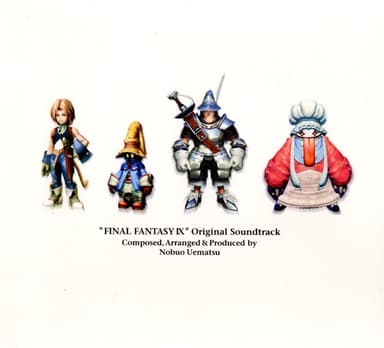
Final Fantasy IX: You Are Not Alone
Nobuo Uematsu
Among Nobuo Uematsu's vast catalogue of compositions for the Final Fantasy series, this one stands apart because it operates as emotional catharsis at a narrative moment of complete solitude. The piece begins with a spare piano motif, notes chosen with the deliberateness of someone choosing words carefully for something that must be said exactly right. Then strings enter, and what follows is one of the most controlled crescendos in game music history — not explosive, but accumulative, the way grief gives way to the recognition that love persists even inside loss. The harmonic language is romantic in the 19th-century sense, nodding to Chopin and Debussy without borrowing from them directly. Uematsu understood that this moment in the game required music that held two contradictory truths simultaneously: profound loneliness and the reassurance that the protagonist is not, in fact, alone. There are no voices, which is precisely correct — the instruments do the speaking that language would diminish. This track represents the peak of the era when MIDI limitations forced composers into emotional directness rather than spectacle. You'd reach for this not in grief exactly, but in that specific mood that lives adjacent to it — when you're carrying something heavy and need to feel it without being destroyed by it.
slow
2000s
warm, layered, emotionally direct
Japanese game, Western Romantic classical tradition
Classical, Game Music. Romantic orchestral.
melancholic, hopeful. Opens in spare, careful loneliness and accumulates through a controlled crescendo into a quiet affirmation that love persists even inside loss..
energy 4. slow. danceability 1. valence 5.
vocals: none, purely instrumental.
production: piano, strings, orchestral, MIDI-era composition, Romantic harmonic language, no excess.
texture: warm, layered, emotionally direct. acousticness 6.
era: 2000s. Japanese game, Western Romantic classical tradition.
When you're carrying something heavy and need to feel it fully without being destroyed by it.