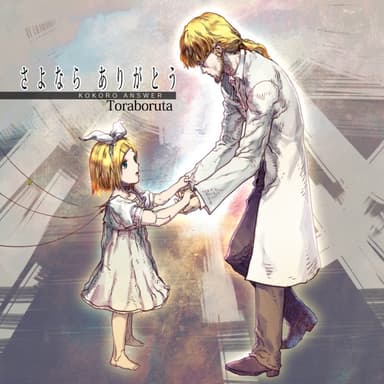
Kokoro (Tohma)
Kagamine Rin
There is a stillness at the heart of this song that makes it feel like watching light refract through glass — beautiful and cold and full of longing. Sparse piano lines open the piece before swelling orchestration gradually fills the space, strings layering in as if mirroring the emergence of something vast and new. Kagamine Rin's synthesized voice is tuned here to sound vulnerable, almost childlike, the slight mechanical edge of the Vocaloid timbre working in the song's favor rather than against it — it underscores that the singer is not quite human, is reaching toward humanity and not yet there. The story is one of an artificial being receiving a heart for the first time, and the music maps that experience with aching literalness: wonder, grief, and joy arriving simultaneously, indistinguishable from one another. The emotional arc builds slowly and then crests in a way that feels genuinely devastating, the kind of crescendo that catches in the chest. Within the Vocaloid community this is considered a landmark — a demonstration that synthesized voices could carry genuinely complex emotional weight, not just novelty. It belongs in a late-night room, headphones on, when you want to feel something vast and slightly sad about what it means to be conscious.
slow
2000s
cold, luminous, expansive
Japanese Vocaloid culture
Vocaloid, Classical. orchestral ballad.
melancholic, nostalgic. Begins in sparse, cold stillness then swells through layered strings into a devastating crescendo where wonder and grief arrive simultaneously and indistinguishably..
energy 5. slow. danceability 2. valence 5.
vocals: vulnerable female, childlike, slightly mechanical, reaching toward humanity.
production: sparse piano, swelling strings, gradual orchestral build, restrained dynamics.
texture: cold, luminous, expansive. acousticness 5.
era: 2000s. Japanese Vocaloid culture.
Late night with headphones when you want to feel something vast and melancholic about what it means to be conscious.