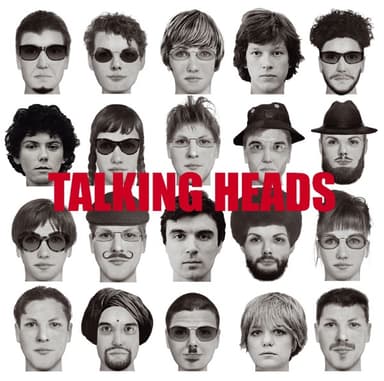
Love → Building on Fire
Talking Heads
Few debut singles have ever sounded quite this anxious in quite this specific way. The guitar chimes in a pattern that feels circular and slightly obsessive, the rhythm propulsive but also somehow clenched — like a person pacing back and forth in a small room. There's a nervous energy baked into the production itself, every element slightly twitchy, the arrangement suggesting motion without release. David Byrne's vocal is one of the most distinctive in rock: reedy, slightly nasal, and delivered with a kind of wide-eyed urgency that makes even mundane syllables sound alarming. He sings like someone reporting a personal emergency in clinical terms, the gap between the emotional content and the delivery style creating its own strange comedy. The lyrics circle around desire as a kind of instability, love figured not as warmth but as combustion — something that could set the whole structure ablaze. This was New York art-punk in its earliest form, the Talking Heads emerging from CBGB as something that didn't quite fit any existing category: too arty for pure punk, too nervy for new wave, too tuneful for noise. It announced a group that would spend the next decade finding out how far that anxiety could take them. Play it when you want music that understands that falling for someone is also a little bit terrifying.
fast
1970s
nervous, bright, angular
New York City — CBGB art-punk scene
New Wave, Art Punk. Post-Punk, Art Rock.
anxious, euphoric. Begins in twitchy, clenched anxiety and sustains it without release — desire figured as instability, the tension the whole point..
energy 7. fast. danceability 6. valence 6.
vocals: reedy nasal male, wide-eyed urgency, clinical delivery of personal emergencies, twitchy.
production: circular obsessive guitar chimes, propulsive taut rhythm section, every element slightly clenched.
texture: nervous, bright, angular. acousticness 2.
era: 1970s. New York City — CBGB art-punk scene.
Early in an evening when anticipation and low-grade terror about someone have become impossible to distinguish.