Sekere
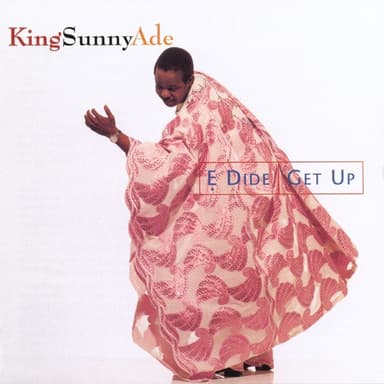
King Sunny Adé
The talking drums arrive first — not as accompaniment but as conversation, trading call-and-response phrases with the sekere's cascading bead-rattle before a single guitar note has been struck. King Sunny Adé builds this track the way a market fills at dawn: gradually, organically, each layer finding its groove without crowding the others. The sekere itself — a gourd wrapped in a net of cowrie shells or seeds — gives the song its title and its heartbeat, its dry shimmer running underneath pedal-steel guitar lines that bend and hover like heat off Lagos asphalt. Adé's vocal sits at the center with the ease of a master griot, warm and unhurried, addressing the congregation rather than performing for it. There is no dramatic peak, no verse-chorus tension — instead the music moves in wide, unhurried circles, expanding and contracting like breathing. The emotional register is devotional joy: gratitude expressed through motion rather than words. This is Jùjú in its most ceremonial dimension, rooted in the Yoruba tradition of using music to honor, to bless, and to keep community alive through shared rhythm. You reach for this song on a slow Sunday afternoon when you want to feel connected to something older and larger than yourself, something that predates recorded sound but thrives inside it.
medium
1980s
shimmering, warm, ceremonial
Yoruba / Nigerian Jùjú music
Jùjú, World Music. Yoruba Jùjú.
serene, devotional. Builds gradually from talking-drum-and-sekere conversation through layered instrumentation into expansive devotional joy, moving in wide unhurried circles without climax..
energy 4. medium. danceability 6. valence 8.
vocals: warm male griot, congregational address, easy and unhurried.
production: sekere percussion, pedal steel guitar, talking drums, interlocking guitars, minimal.
texture: shimmering, warm, ceremonial. acousticness 7.
era: 1980s. Yoruba / Nigerian Jùjú music.
Slow Sunday afternoon when you want to feel connected to something older and larger than yourself.