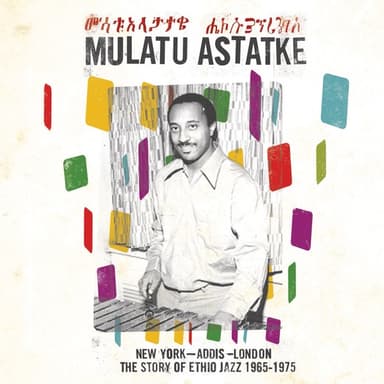
Yèkèrmo Sèw
Mulatu Astatke
Mulatu Astatke's "Yèkèrmo Sèw" exists in its own temporal gravity — a slow, winding instrumental that seems to bend Western jazz harmony through an entirely different tonal imagination, one shaped by Ethiopian modal scales that carry centuries of liturgical and folk tradition. The vibraphone, Astatke's signature voice, enters with sparse, deliberate strokes, each note allowed to fully decay before the next arrives, creating a meditative space that feels less like a jazz performance and more like a ceremony of careful listening. The rhythm is not quite swing, not quite African polyrhythm — it occupies an invented middle ground where the clave-like pulse feels inevitable and ancient simultaneously. Bass and drums operate below the melody with restrained authority, refusing to hurry what the vibraphone is patiently constructing. There are no vocals, and none are needed — the absence of words forces the listener inward, the melody itself carrying a reflective, slightly melancholic quality that suggests wisdom earned through observation rather than declaration. This is the track that introduced the world to Ethiojazz when it found new audiences in the late 1990s, and it rewards deep listening across decades. Reach for it in early morning quiet, or during any moment that asks for thought rather than action — music that makes you feel you are hearing something that was always there, waiting to be remembered.
very slow
1970s
sparse, meditative, warm
Ethiopian, Addis Ababa jazz scene, Ethio-jazz tradition
Jazz, World Music. Ethio-Jazz.
meditative, melancholic. Begins in sparse deliberate stillness and deepens gradually into reflective contemplation, the melody accumulating weight without urgency..
energy 2. very slow. danceability 2. valence 4.
vocals: instrumental — no vocals.
production: sparse vibraphone, restrained bass and drums, Ethiopian modal harmony.
texture: sparse, meditative, warm. acousticness 6.
era: 1970s. Ethiopian, Addis Ababa jazz scene, Ethio-jazz tradition.
Early morning quiet or any moment that asks for thought rather than action — when you want to feel you are hearing something that was always there, waiting.