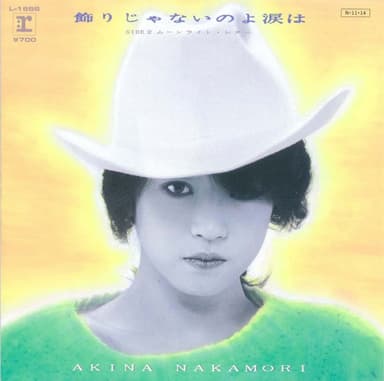
飾りじゃないのよ涙は
中森明菜
Written by one of Japan's most respected singer-songwriters and handed to Nakamori Akina in 1984, this song operates as a fierce declaration of emotional authenticity, and Akina delivers it with a conviction that made it one of the defining recordings of her career. The arrangement has a rock edge — electric guitar, a rhythmic drive — that distinguishes it from the more synth-heavy productions of her other material, and that rougher texture suits the song's message: this is not a song about being pretty, it is a song about refusing to be dismissed. The central argument is simple and powerful — tears are not ornamental, they are not weakness, they are not something to be minimized or managed for someone else's comfort. Akina's voice here has a defiant quality, the particular anger of someone who has been misread for a long time and has finally run out of patience for polite correction. She does not beg to be understood; she insists on it. The song arrived at a moment when the idol system was being complicated by artists who demanded to be taken seriously as performers, and this recording was part of that rupture. It remains urgent in a way that songs about emotional authenticity sometimes are not — because the performance actually contains what it claims.
medium
1980s
raw, grounded, charged
Japanese pop-rock, mid-1980s idol system rupture
J-Pop, Rock. J-Rock Pop.
defiant, aggressive. Opens as a fierce declaration of authenticity and escalates into outright insistence, ending with refusal rather than resolution..
energy 7. medium. danceability 5. valence 5.
vocals: defiant female, angry, insistent, emotionally raw and uncompromising.
production: electric guitar, rock-edged rhythm, synth elements, driven and grounded.
texture: raw, grounded, charged. acousticness 3.
era: 1980s. Japanese pop-rock, mid-1980s idol system rupture.
when you have been misread or dismissed for too long and need music that insists on being taken seriously