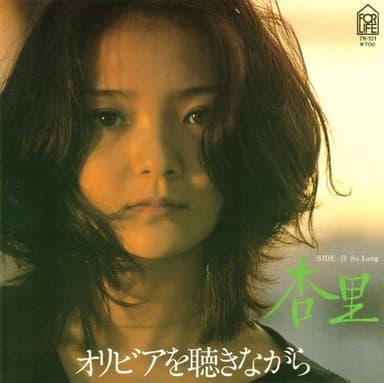
オリビアを聴きながら
杏里
This is the sound of sophistication arriving early — 杏里 was barely twenty when she recorded this, and yet the track carries itself with the assurance of someone who has been making this kind of music for decades. The arrangement is spare compared to the dense productions common in city pop at the time: piano chords voiced with jazz-inflected openness, bass that moves with deliberate melodic intention, strings that enter with restraint and provide cushion rather than drama. The production has an intimate quality that serves the song's emotional content, which is the particular loneliness of listening to someone else's voice (Olivia Newton-John's, named directly) and finding in it both comfort and a sharpened awareness of your own solitude. Anri's vocal delivery here is one of the most remarkable debuts in Japanese pop — a tone that combines girlish clarity with unexpected depth, and a phrasing that suggests she understands exactly what the song is asking of her without over-delivering on it. The lyric circles around the use of music as emotional shelter, the way we sometimes allow a specific song or voice to stand in for feelings we cannot articulate otherwise. Released in 1978, it speaks to a specific cultural moment in Japan when Western pop had become deeply integrated into daily emotional life without losing its quality of the slightly foreign and therefore romantic. This is late-night music, headphone music, music for lying still in the dark and allowing the feeling to be whatever it needs to be.
slow
1970s
sparse, warm, intimate
Japan, late-70s integration of Western pop into daily emotional life
J-Pop, Ballad. City Pop.
melancholic, dreamy. Opens in solitude and moves deeper into it, finding unexpected shelter and sharpened loneliness simultaneously..
energy 2. slow. danceability 1. valence 5.
vocals: clear girlish female, unexpected depth, restrained, quietly assured.
production: jazz-inflected piano, melodic bass, restrained strings, intimate room sound.
texture: sparse, warm, intimate. acousticness 7.
era: 1970s. Japan, late-70s integration of Western pop into daily emotional life.
Late night with headphones, lying still in the dark and allowing feeling to be whatever it needs to be.