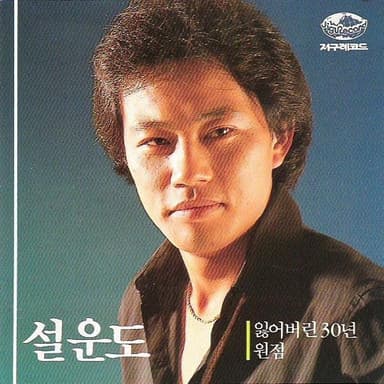
잃어버린 30년
설운도
Few songs carry the specific weight that this one does. The "thirty lost years" of the title refers to the decades-long separation of families divided by the Korean War and the subsequent partition of the peninsula — a wound in Korean national life that by the time this song was recorded had already become permanent for millions of people. Sul Woon-do pours this historical grief into his vocal with a rawness that makes the song almost difficult to hear. His voice breaks at the right moments — not artificially, but with the authenticity of someone genuinely inhabiting the emotion — and the arrangement supports him with a sorrow that builds slowly, strings accumulating beneath the melody until the weight becomes nearly unbearable. The tempo is funereal but not static; there is a rhythmic pulse underneath that feels like a heartbeat that has kept going despite everything. The lyric is a lament spoken from the perspective of someone who has aged for thirty years while carrying the face of a lost family member in their memory, unsure if that person is even still alive. For Korean audiences of a certain generation, this song functions less as entertainment and more as a form of collective mourning — a place where private grief and national tragedy can briefly occupy the same space. You do not choose this song casually. It finds you at moments of accumulation, when ordinary sadness has built into something that demands acknowledgment.
slow
1980s
heavy, raw, sorrowful
South Korean trot, Korean War family separation, collective national mourning
Trot, Ballad. Korean historical ballad.
sorrowful, mournful. Opens in quiet historical grief and builds with accumulating strings to a weight that becomes nearly unbearable by the final phrase..
energy 2. slow. danceability 1. valence 1.
vocals: raw male, voice breaks authentically, deeply grief-laden, inhabiting emotion fully.
production: gradually accumulating strings, funereal rhythmic pulse, slow orchestral build.
texture: heavy, raw, sorrowful. acousticness 5.
era: 1980s. South Korean trot, Korean War family separation, collective national mourning.
Moments of accumulation when ordinary sadness has built into something that demands acknowledgment — not chosen casually.