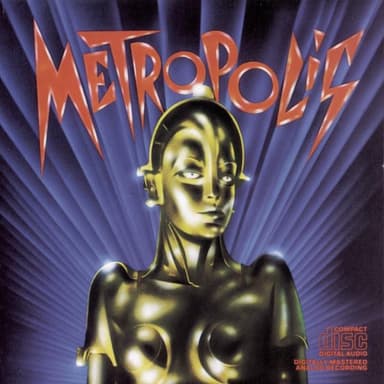
Love Kills (Metropolis)
Giorgio Moroder
Giorgio Moroder's production in 1984 sounds exactly like what it is: a futurist's interpretation of the past. Written for the restored version of Fritz Lang's silent Metropolis, "Love Kills" combines Moroder's signature electronic architecture — clean synthesizer lines, metronomic sequenced bass, hi-hat precision — with a vocal performance that nearly detonates the careful machinery around it. Freddie Mercury's voice is operatic and physical, capable of enormous expressiveness, and here it strains against the clinical precision of the production in a way that becomes the song's central tension. Moroder keeps everything controlled, almost cold; Mercury fills every space with warmth and urgency. The lyric plays on the film's themes — machine versus human, desire as a destructive force — without requiring the film for context: it stands as a statement about love's capacity to undo. The production sits at an intersection between disco's dying echoes and the incoming dominance of synth-pop, and it has the slightly glossy, slightly airless quality of early-80s electronic music at its most self-conscious. You reach for this late at night in a city, or when you want something that sounds exactly like neon and distance.
medium
1980s
glossy, cold, polished
Italian-American electronic, inspired by German silent film
Electronic, Pop. Synth-Pop.
dramatic, melancholic. Sustains a cold mechanical tension throughout, with a human vocal surging against the clinical precision, never fully winning..
energy 7. medium. danceability 6. valence 4.
vocals: operatic male, powerful, expressive, theatrical, urgent.
production: clean synthesizer lines, sequenced bass, hi-hat percussion, electronic, early-80s gloss.
texture: glossy, cold, polished. acousticness 1.
era: 1980s. Italian-American electronic, inspired by German silent film.
Late night alone in a city, watching neon reflections on wet pavement from a window.