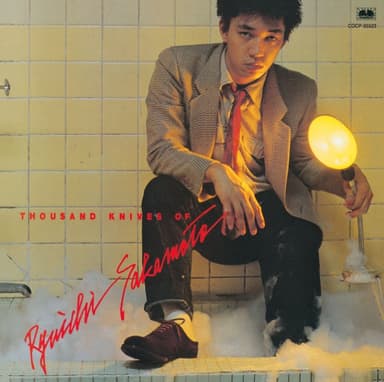
Thousand Knives
Ryuichi Sakamoto
Before Sakamoto became the composer of quiet dissolution, he was something sharper and stranger — and "Thousand Knives" is the document of that earlier self. Released in 1978, it opens with aggressive synthesizer patterns that feel both mechanical and feverish, the Moog spitting rhythmic bursts in a way that references Kraftwerk without sounding like imitation. The title is not metaphorical — the music genuinely cuts, each staccato phrase landing with the precision of a blade. Underneath the electronic aggression runs a political charge: the piece references Mao Zedong's death, and Sakamoto's characteristic wit is audible in the way revolutionary grandeur is rendered through machines that strip human warmth entirely. The tempo is relentless but not danceable — it's the rhythm of ideology, of march cadences and propaganda broadcasts reduced to pure sound. Vocally, the piece occasionally incorporates processed speech fragments that feel like transmissions from another era. For a young Japanese composer in 1978, this was an act of radical positioning — claiming the future of electronic music as Asian, intellectual, and deliberately cold. You'd reach for this when you want music that is genuinely confrontational, that respects your intelligence while refusing to comfort you.
fast
1970s
sharp, cold, mechanical
Japanese electronic avant-garde
Electronic, Avant-Garde. Electro / Early Synth.
aggressive, cold. Opens with mechanical precision and sustains relentless, intellectual aggression from start to finish without warmth or resolution..
energy 8. fast. danceability 4. valence 3.
vocals: processed speech fragments, robotic, cold, transmissive.
production: Moog synthesizer, staccato patterns, no organic instruments, stark electronic.
texture: sharp, cold, mechanical. acousticness 1.
era: 1970s. Japanese electronic avant-garde.
When you want music that is genuinely confrontational and respects your intelligence while refusing to comfort you.