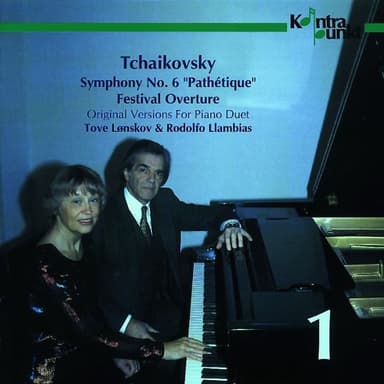
Symphony No. 6 "Pathétique", Op. 74: I. Adagio — Allegro non troppo
Pyotr Ilyich Tchaikovsky
The opening is a long, slow unfurling from the bass instruments — a bassoon-and-low-string theme that emerges from near-silence like something pulling itself out of the earth, dark and searching, harmonically ambiguous enough to be genuinely unsettling. The Pathétique's first movement is structured around two radically different emotional states — the anguished Adagio introduction and a main Allegro section whose second theme is one of the most achingly lyrical Tchaikovsky ever wrote — and the genius is in how the music refuses to let either state win. The stormy passages build with terrifying momentum, and the tender second theme arrives as pure relief, but both are undermined by what came before and after. The development tears the material apart with increasing violence, and the recapitulation feels not triumphant but haunted, as if the themes have been through something they can't recover from. Tchaikovsky premiered this symphony nine days before his death, and the music carries an awareness of its own finality — not melodramatically, but in the particular quality of its silences and its refusals to offer resolution. The movement ends not in triumph but in a kind of exhausted arrival, the music finding a major chord almost accidentally. Reach for this when you want to sit with something difficult and true — not to feel better, but to feel accurately.
medium
1890s
dark, haunted, turbulent
Russian late Romantic orchestral
Classical, Romantic. Romantic symphony movement.
anguished, melancholic. Emerges from near-silence in dark ambiguity, alternates between violent anguish and achingly lyrical tenderness without letting either win, settling into haunted, exhausted arrival..
energy 6. medium. danceability 1. valence 2.
vocals: instrumental, no vocals.
production: bassoon-and-low-string opening, full orchestra, sweeping string lyricism, violent dynamic contrasts.
texture: dark, haunted, turbulent. acousticness 7.
era: 1890s. Russian late Romantic orchestral.
Sitting alone with something difficult and true — not to feel better, but to feel accurately.