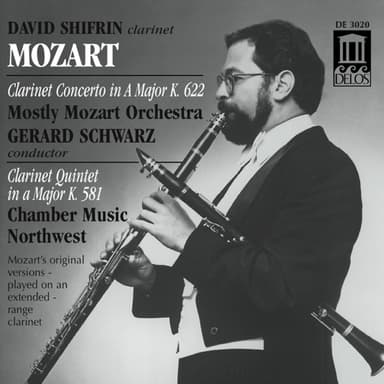
Clarinet Concerto in A major, K. 622: II. Adagio
Wolfgang Amadeus Mozart
There is a quality to this movement that feels less like music being performed and more like a private thought being spoken aloud. The clarinet enters over a gently rocking string accompaniment, and what emerges is a melody of such unhurried grace that time seems to loosen its grip. Mozart wrote this in the last months of his life, and whether or not one reads biography into the notes, there is an unmistakable sense of tender resignation — not sadness exactly, but the kind of peace that lies on the other side of longing. The clarinet's natural warmth in its chalumeau register gives the melody a human, almost conversational quality, as though the instrument is confiding something it could not say in words. The orchestral writing is transparent, never crowding the soloist, letting each phrase breathe fully before the next arrives. Dynamics stay intimate throughout — there are no grand gestures, no climactic outbursts. The movement simply unfolds, circles back, and dissolves. This is music for a late night when you are neither happy nor unhappy, just quietly present with yourself. A long drive home, a candle burning low, the particular stillness after something important has passed.
very slow
1790s
warm, intimate, transparent
Austrian Classical
Classical. Concerto.
serene, melancholic. Opens in tender, unhurried resignation and gently unfolds without climax, dissolving into quiet peace..
energy 2. very slow. danceability 1. valence 5.
vocals: instrumental, no vocals.
production: clarinet soloist, transparent string orchestra, minimal accompaniment.
texture: warm, intimate, transparent. acousticness 9.
era: 1790s. Austrian Classical.
Late night alone in quiet stillness after something meaningful has ended.