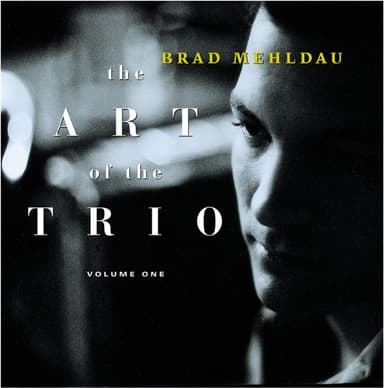
Blackbird
Brad Mehldau
McCartney's "Blackbird" is perhaps the essential solo guitar song in the rock repertoire — the independence of bass thumb and treble melody lines creating two-voice counterpoint that already approaches classical technique. The piano is in some ways its natural successor instrument, capable of even greater voice independence, greater harmonic depth. Mehldau's interpretation takes what McCartney achieved within acoustic guitar's beautiful limitations as a kind of opening constraint and expands outward from it with care. The melody remains recognizable, placed in the right hand's upper register, but the harmonic world beneath becomes considerably richer — extended and altered chords drawing from jazz harmony's vocabulary, suggesting the same emotional territory as the original, that particular combination of encouragement and lament, waiting for a moment that may never arrive, but rendered with greater tonal complexity and a piano's fuller sustain. What the original implies in two voices is stated in four, five, six. Mehldau's dynamic range moves between passages of genuine pianissimo delicacy, where you must lean toward the speakers, and moments of fuller-voiced declaration that never tip into sentimentality. This is exactly the right instinct, because "Blackbird" is actually an unsentimental song despite its tender surface — it contains real difficulty — and his interpretation honors that quality completely. Best experienced in quiet rooms, late at night when the day's accumulated noise has finally subsided and there is space to hear what the song has always been saying.
slow
2000s
delicate, rich, sustained
American jazz, British rock source material
Jazz, Pop. Jazz Piano Solo.
melancholic, hopeful. Moves from delicate, recognizable tenderness through expanding harmonic richness, sustaining the original's unsentimental tension between encouragement and lament..
energy 3. slow. danceability 1. valence 5.
vocals: instrumental, no vocals.
production: solo piano, multi-voice counterpoint, extended jazz harmonies.
texture: delicate, rich, sustained. acousticness 9.
era: 2000s. American jazz, British rock source material.
Quiet late-night listening when the day's accumulated noise has subsided and there is finally space to hear carefully.