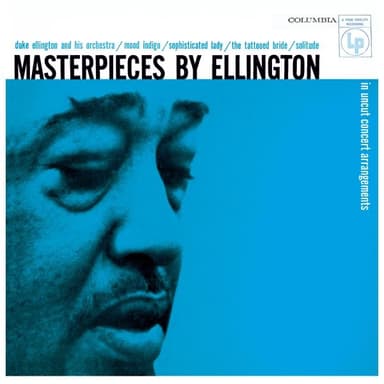
Mood Indigo
Duke Ellington
This is one of the most unusual textures in the Ellington catalog — three instruments playing three different notes in three different registers with three different mutes, creating a sound that has been described as a color but really functions more like a feeling: the blue-gray of dawn before full light, the specific ache of waking alone. The ensemble voicing gives the piece a blurred, watercolor quality, harmonics bleeding into each other at the edges. The tempo is barely a tempo at all; it drifts more than it moves, measuring time in sighs rather than beats. Ellington's compositional genius is in restraint here — the piece doesn't do much, and that's the point. It holds a mood steady rather than developing it, asking the listener to sit inside a particular shade of sadness without the promise of resolution. Vocalists who have sung it tend to phrase it like a confession. This is music for 3 a.m. when sleep won't come, for the space between missing someone and fully understanding why. It doesn't comfort exactly — it validates, which is sometimes more important.
slow
1930s
blurred, muted, ethereal
African American jazz, Ellington orchestral tradition
Jazz, Blues. Orchestral Jazz.
melancholic, longing. Holds a blue-gray ache steady throughout with no development or resolution, asking the listener simply to sit inside it..
energy 2. slow. danceability 2. valence 2.
vocals: instrumental; muted horns blurred together, watercolor ensemble voice, occasional whispered vocal.
production: three muted horns in unusual voicing, minimal rhythm, drifting ensemble texture.
texture: blurred, muted, ethereal. acousticness 8.
era: 1930s. African American jazz, Ellington orchestral tradition.
3 a.m. when sleep won't come and you're sitting with the ache of missing someone, needing music that validates rather than comforts.