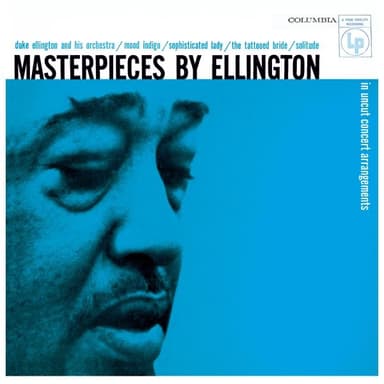
Sophisticated Lady
Duke Ellington
There's a portrait quality to this music — it feels like looking at someone rather than being told about them. Ellington reportedly wrote it imagining a woman of great dignity and refinement who had sacrificed personal happiness for social polish, and whether or not that story is apocryphal, it shapes how you hear the melody: stately and beautiful and carrying something heavy underneath. The reed section carries the main theme with a cushioned, almost velvet tone, and the harmonies have that characteristically Ellingtonian quality of being both lush and precise, emotional and controlled simultaneously. The solos are restrained, choosing expression over display, which fits the subject. This is not a song about passion; it's about the performance of composure, and in that gap between surface and interior lies everything interesting about it. The piece sits most naturally in formal spaces — a room with low light and good furniture, late in an evening when the gathering has thinned to the people who actually want to be there. It ages beautifully on repeated listening, each hearing revealing another layer of what Ellington understood about loneliness and elegance and how often the two are related.
slow
1930s
velvet, lush, controlled
African American jazz, Ellington portrait tradition
Jazz, Ballad. Orchestral Jazz.
melancholic, elegant. Maintains a surface of composed dignity throughout while quietly revealing the loneliness underneath, never collapsing the tension between the two..
energy 3. slow. danceability 2. valence 4.
vocals: instrumental; reed section velvet and restrained, choosing expression over display.
production: lush reed section, controlled Ellington voicings, soft rhythm backdrop, refined ensemble.
texture: velvet, lush, controlled. acousticness 8.
era: 1930s. African American jazz, Ellington portrait tradition.
Formal late evening when the gathering has thinned to the people who actually want to be there, in a room with low light and good furniture.