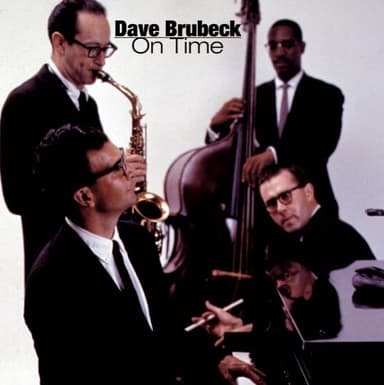
Blue Rondo à la Turk
Dave Brubeck
The opening is almost aggressive in its angularity — a head-nodding, asymmetrical figure in nine-eight time derived from Turkish folk music, the piano hammering out a rhythmic pattern that doesn't resolve where Western ears expect it to. Then, without warning, it opens into a swinging twelve-eight section that feels like a release valve, before snapping back to the irregular pulse. Brubeck was doing something genuinely unusual here: not exoticizing another culture but actually wrestling with its rhythmic logic, trying to understand what it felt like from the inside. The result is a piece that keeps you slightly off-balance in a productive way, forcing attention, preventing the mind from drifting. The piano playing is percussive and rhythmically declarative, almost orchestral in its texture. It belongs to a particular moment in American jazz when the music was most intellectually ambitious, when musicians were reading ethnomusicology and wondering what else time could do. This is for alert listening — not passive, but engaged.
fast
1950s
angular, percussive, dense
American jazz with Turkish folk rhythmic influence
Jazz. Progressive Jazz / Third Stream.
anxious, exhilarated. Opens with aggressive angular asymmetry, releases into swinging relief, then snaps back — cycling productive tension and resolution throughout..
energy 8. fast. danceability 5. valence 6.
vocals: instrumental — no vocals.
production: percussive piano, bass, drums in asymmetric meter, Turkish folk-influenced figures.
texture: angular, percussive, dense. acousticness 5.
era: 1950s. American jazz with Turkish folk rhythmic influence.
Alert, engaged listening session when you want music that actively challenges your internal sense of rhythm and keeps your mind working.