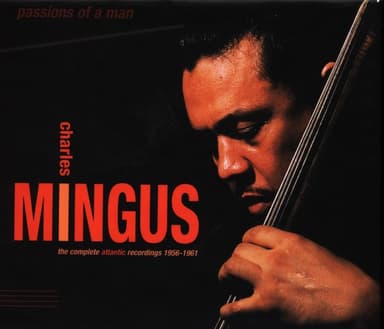
Haitian Fight Song
Charles Mingus
The bass enters alone — Mingus's bass, unmistakable in its dark, chest-register authority — and establishes something that is less a groove than a declaration. The tempo is slow enough to feel deliberate, with a weight that accumulates over the piece's duration rather than releasing. What made "Haitian Fight Song" radical was Mingus's stated context: he said he could play this music thinking about all kinds of persecution, making it one of the earliest jazz compositions explicitly framed as political expression. The music earns that framing without needing it — the sustained, churning intensity would convey struggle even without the title or the statement. The soloists who enter later take up the theme with an urgency that feels earned rather than performed; the music has been building pressure since the first note and the soloists release it in bursts. There is something almost ancient in the rhythmic feeling, a pulse that seems less like jazz meter than like something deeper, more elemental — the sound of effort sustained against resistance. The dynamics build and recede but never fully relax, which is what gives the piece its particular quality: even its quieter passages feel tense. This is music for confronting difficulty directly, for moments when softness would be a form of dishonesty.
slow
1950s
dark, dense, elemental
American jazz; politically inspired by Haitian history and ongoing racial persecution
Jazz, Avant-Garde Jazz. Avant-Garde Jazz.
defiant, tense. Opens with a lone bass declaration and accumulates political weight steadily, never fully releasing the pressure it builds..
energy 6. slow. danceability 3. valence 3.
vocals: instrumental — no vocals.
production: bass-forward, horn soloists, deliberate pacing, acoustic; politically framed composition.
texture: dark, dense, elemental. acousticness 8.
era: 1950s. American jazz; politically inspired by Haitian history and ongoing racial persecution.
Confronting difficulty directly, when softness or evasion would be a form of dishonesty.