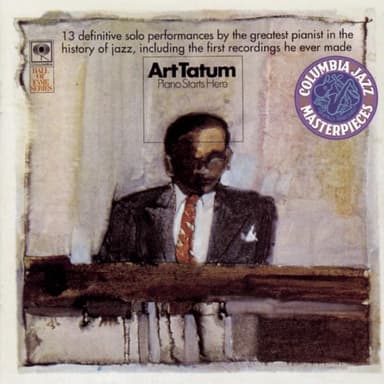
Tea for Two
Art Tatum
The piano enters alone, and for a moment you're uncertain whether what follows will be stride, swing, or something else entirely. Then Tatum begins to elaborate and the uncertainty becomes the point — he moves through the standard's harmonic framework the way water moves through landscape, finding every possible path simultaneously. His left hand maintains the song's architecture while his right hand decorates, extends, inverts, and surprises with runs that seem to arrive from adjacent harmonic universes before snapping back to the home key with perfect confidence. The effect is almost cinematic: a familiar song made strange and then familiar again, endlessly. The tempo is conversational, unhurried but never slow, the dynamics constantly shifting so that the same phrase appears bright one moment and shadowed the next. Listen to this when you want to understand what it means to truly own a piece of music — not to perform it but to inhabit it completely.
medium
1940s
bright, ornate, fluid
American jazz, stride and swing piano tradition
Jazz. Stride Piano.
playful, euphoric. Opens with a familiar melody before dissolving into adventurous harmonic explorations that circle back to reinvigorate the theme, endlessly renewing the original..
energy 6. medium. danceability 5. valence 8.
vocals: instrumental solo piano.
production: solo acoustic piano, stride left hand, ornate right hand runs.
texture: bright, ornate, fluid. acousticness 10.
era: 1940s. American jazz, stride and swing piano tradition.
When you want to understand what it means to truly inhabit a piece of music rather than merely perform it.