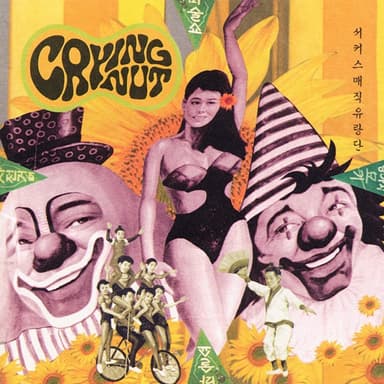
아줌마
크라잉넛
There's a theatrical absurdity to "아줌마" that announces itself in the first five seconds. The band leans into a punk-ska bounce, the rhythm section locking into a groove that's almost gleefully ridiculous — the kind of tempo that makes it physically difficult not to move. What makes the song interesting is how it weaponizes affection: the subject is a middle-aged Korean woman, a figure usually rendered invisible or comedic in pop culture, but Crying Nut treat her with a chaotic reverence that feels genuinely subversive. The vocal performance is pure performance — exaggerated, almost cartoonish, but committed enough to land past parody into something stranger. The production is deliberately raw, the guitars fuzzy and overdriven in that early Hongdae basement show way, the mix making everything feel like it was recorded live in a small, loud room with friends. It's a song that understands the political potential of silliness — that laughing at something seriously is sometimes the most honest thing you can do. Culturally it's a snapshot of the irreverence that defined Korean punk's first wave, when the point wasn't to be cool but to be alive and loud and specific. Best experienced at maximum volume in a moving vehicle, or at a show where everyone already knows the words.
very fast
1990s
raw, loud, chaotic
South Korea, Hongdae first-wave punk irreverence
Punk, Ska. Punk-Ska.
playful, euphoric. Launches immediately into chaotic gleeful absurdity and sustains it — silliness deployed so committedly it crosses into something genuinely subversive and alive..
energy 9. very fast. danceability 8. valence 9.
vocals: exaggerated theatrical male, cartoonish yet committed, high energy.
production: fuzzy overdriven guitars, ska-inflected rhythm section, raw basement-show mix.
texture: raw, loud, chaotic. acousticness 1.
era: 1990s. South Korea, Hongdae first-wave punk irreverence.
Maximum volume in a moving vehicle, or at a show where everyone already knows the words.