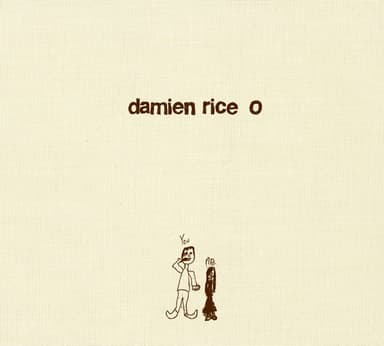
The Blower's Daughter
Damien Rice
The opening is immediately arresting: a sparse acoustic guitar figure, barely touching the strings, surrounded by so much silence that the silence itself becomes an instrument. Damien Rice builds this song from restraint, adding elements so gradually that each new layer — a whispered cello, Lisa Hannigan's voice floating in the high register like mist, a dynamic swell that never quite resolves into catharsis — feels earned rather than arranged. The production is raw in a deliberate way, the kind of rawness that sounds accidental but was achieved through meticulous attention to fragility. Emotionally the song is devastating in its specificity: it doesn't describe heartbreak in general terms but captures the strange paralysis of early grief, the moment when you can't look away from something that is no longer available to you. Rice's voice is cracked at its edges, oscillating between control and surrender, and that oscillation is the whole emotional argument of the song. He sounds like someone trying to hold himself together while describing why he can't. The lyric circles an obsession — a person or feeling that won't release its grip — with the honesty of someone who has stopped pretending they're fine. This emerged from the early 2000s Irish folk scene and became a landmark of the confessional singer-songwriter tradition, influencing a generation of artists who understood that vulnerability, fully committed to, is more powerful than polish. Play this alone, late at night, when you need music that tells the truth about how much things can hurt.
very slow
2000s
raw, fragile, intimate
Irish folk, confessional singer-songwriter tradition
Folk, Indie. Confessional singer-songwriter.
melancholic, longing. Begins in fragile restraint and builds through accumulating layers toward a swell that never fully resolves, leaving grief suspended..
energy 2. very slow. danceability 1. valence 2.
vocals: cracked male, oscillating control, raw, confessional; accompanied by ethereal female harmony.
production: sparse acoustic guitar, cello, layered vocals, deliberate silence as element.
texture: raw, fragile, intimate. acousticness 9.
era: 2000s. Irish folk, confessional singer-songwriter tradition.
Alone, late at night, when you need music that tells the truth about how much things can hurt.