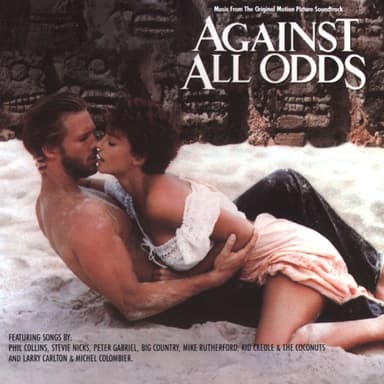
Against All Odds (Take a Look at Me Now)
Phil Collins
The production strips nearly everything away — a piano line that sounds close to naked, soft synths that hover at the edges, a tempo slow enough to make each measure feel weighted. This is a song that understands grief and love as the same thing, that the depth of loss proves the depth of what was felt. Collins's voice carries real damage here, a catch and fragility in the upper registers that no technical polish could smooth away and that he wisely never tries to hide. The emotional movement of the song follows something honest: not anger, not self-pity, but the specific helplessness of watching someone walk away whom you know you cannot replace. The orchestration builds gradually, but even at its fullest the arrangement preserves a sense of exposure — this never becomes a power ballad hiding behind production. It arrived at a particular moment in early-1980s pop when confessional vulnerability from male voices was allowed full commercial reach, and it influenced a generation of songwriters who followed. This is a song for endings — breakups, goodbyes, the final reading of old messages — for whenever you need music that acknowledges the bottom of a feeling without trying to lift you out of it.
slow
1980s
sparse, exposed, intimate
British pop-rock
Pop, Rock. Confessional Ballad.
melancholic, vulnerable. Begins in exposed helplessness, builds through gradual orchestration, but preserves raw grief even at its fullest without lifting into false hope..
energy 2. slow. danceability 1. valence 2.
vocals: fragile male tenor, caught and damaged in upper registers, deliberately unpolished.
production: near-naked piano, soft peripheral synths, gradual restrained orchestration.
texture: sparse, exposed, intimate. acousticness 4.
era: 1980s. British pop-rock.
The final hour of a breakup or goodbye when you need music that acknowledges the bottom of a feeling without trying to lift you out of it.