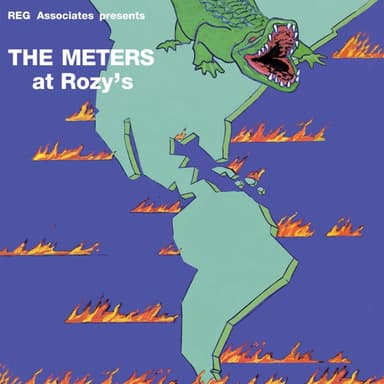
Chicken Strut
The Meters
The guitar entrance on this track has a quality of barely-contained mischief — Nocentelli coaxes a tone that is sly and elastic, somewhere between a question and a provocation. The rhythm section responds by settling into one of the deepest, most unhurried grooves in the Meters catalog, the tempo deceptively relaxed while the internal subdivision hums with complexity. The bass, as always with George Porter Jr., is melodically active without ever drawing attention away from its rhythmic function — it's simultaneously the harmonic foundation and a secondary conversation happening underneath everything else. There's a playfulness here that distinguishes this track from the more austere confidence of "Cissy Strut" — if that song is a slow strut, this is a knowing grin, a side-eye, a move executed with full awareness of its own slickness. The keyboard adds a brief melodic call-and-response with the guitar, but mostly functions as texture, keeping the mid-range from feeling empty. Instrumentally, this is a masterclass in how funk breathes — the spaces between notes are structured, the dynamics shift within bars in ways that feel spontaneous but are deeply rehearsed. It belongs to the New Orleans second-line tradition filtered through 1970s funk, a musical heritage where the march beat became something looser and more sensual. Play this when you need your body to remember something your mind has been overthinking. It's corrective music for people who've been sitting still too long.
slow
1970s
loose, sly, elastic
New Orleans second-line tradition filtered through 1970s funk
Funk. New Orleans second-line funk.
playful, cool. Opens with mischievous sly energy and maintains a knowing grin throughout, deepening rather than building..
energy 5. slow. danceability 7. valence 8.
vocals: instrumental, no vocals.
production: sly elastic guitar, melodically active bass as secondary voice, sparse keyboard texture, tight rehearsed ensemble.
texture: loose, sly, elastic. acousticness 4.
era: 1970s. New Orleans second-line tradition filtered through 1970s funk.
When your body needs to remember how to move after your mind has been sitting still and overthinking too long.