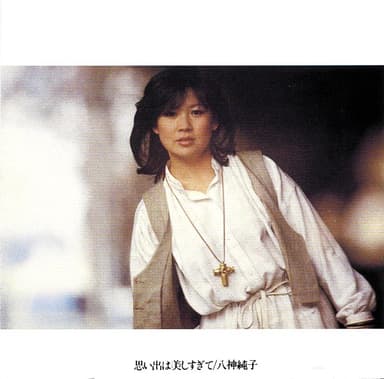
思い出は美しすぎて
八神純子
The song opens into something unusually spacious — an arrangement that allows silence to participate alongside sound, giving each instrumental element room to register individually before they combine into the full picture. A mid-tempo rhythm carries the song without urgency, and the chord progressions move through changes that feel slightly bittersweet even in their most major-key moments, as if the music understands what the lyrics are processing. Yagami's voice here is softer than her more theatrical performances, the vibrato gentled, the phrasing more conversational. She is not performing grief so much as living inside it — speaking to someone absent without raising her voice. The lyric contemplates memories that have become almost unbearably perfect in retrospect, the painful irony that the past grows more beautiful precisely because it is unreachable. There is a maturity in how the song handles this paradox: it does not resolve it, does not offer consolation, simply holds the feeling open and lets it be what it is. The production is warmly analog, with an intimacy that pulls the listener close. This is a song for Sunday mornings when something from the past surfaces unprompted — a photograph, a familiar scent — and the present moment fills briefly with the weight of everything that no longer exists.
slow
1970s
warm, intimate, spacious
Japanese pop
J-Pop, Ballad. Japanese Pop Ballad.
nostalgic, melancholic. Opens into spacious quietude and sustains a bittersweet contemplation of unreachable memories without seeking or offering resolution..
energy 2. slow. danceability 1. valence 3.
vocals: soft female, gentled vibrato, conversational intimacy.
production: warm analog, intimate mid-tempo rhythm, bittersweet chord progressions.
texture: warm, intimate, spacious. acousticness 6.
era: 1970s. Japanese pop.
Sunday morning when something from the past surfaces unprompted and the present fills briefly with the weight of everything that no longer exists.