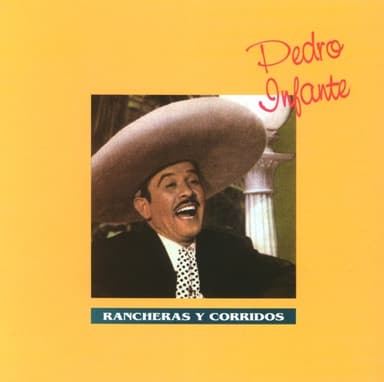
El Rebelde
Pedro Infante
The guitar arrives first, sharp and rhythmic with a syncopated pulse that sets the feet moving before the brain has fully registered the song has begun. This is son ranchero at its most swaggering — brass punching through the mix at intervals like a fist on a table, the bass walking with that elastic bounce particular to Mexican folk music of the 1950s. Infante inhabits the character completely: his delivery is theatrical without tipping into parody, the voice dropping low on certain syllables to signal menace, then lifting into a grin you can actually hear. The song's persona is the outlaw-romantic archetype, a figure Mexican popular culture has always found irresistible — defiant of convention, loyal to his own code, magnetic precisely because he refuses to be domesticated. The cultural DNA runs through corrido and norteño, through the golden age cinema in which Infante himself was the defining masculine image. It's party music, yes — you'd hear it at a celebration where everyone eventually pushes back the chairs and dances — but underneath the bravado is a genuine interrogation of what it means to live outside the boundaries others have drawn for you.
fast
1950s
bright, punchy, kinetic
Mexico, Golden Age cinema, son ranchero and outlaw-romantic archetype
Son Ranchero, Ranchera. Son ranchero.
playful, defiant. Sustains swaggering bravado without arc or descent, a continuous declaration of proud non-conformity that never pauses to question itself..
energy 8. fast. danceability 8. valence 8.
vocals: theatrical tenor, swaggering, character-driven, audibly grinning.
production: syncopated brass punches, elastic bass, rhythmic guitar, 1950s Mexican folk energy.
texture: bright, punchy, kinetic. acousticness 6.
era: 1950s. Mexico, Golden Age cinema, son ranchero and outlaw-romantic archetype.
Party where the chairs eventually get pushed back for dancing, celebrating the pleasure of living outside the boundaries others draw for you.