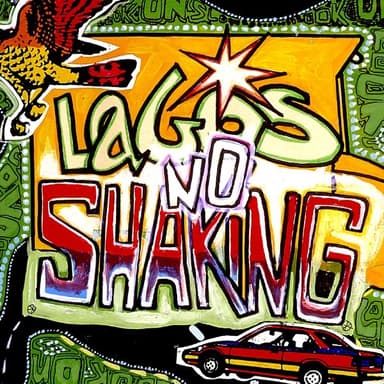
Kilode
Tony Allen
The groove arrives before anything else — a drum kit breathing like a living organism, each kick and hi-hat placed with surgical intention yet loose enough to feel effortless. Tony Allen's "Kilode" unfolds as a slow-burning interrogation, the rhythm section locking into a hypnotic pocket that refuses to hurry. Brass stabs punctuate the air with blunt insistence while the bass walks a sinuous line beneath, holding everything together without ever announcing itself. The production feels both analog and alive, slightly dusty at the edges, warm in the low-mids. Vocalists enter with a conversational urgency — the Yoruba word at the heart of the song ("Why?") becomes not just a lyric but a recurring philosophical demand. The song carries a political restlessness dressed in celebratory clothing, which is the essential contradiction of Afrobeat: joy weaponized as critique. The horn arrangements swell and retreat like tide, giving the track a sense of unresolved tension even as the groove remains immovable. It is music for a smoky Lagos night market circa 1975, for a DJ set that needs to shift gears without losing the floor, for anyone who understands that protest can move your hips.
medium
1970s
warm, dusty, organic
Nigerian Afrobeat, Lagos
Afrobeat, Funk. Nigerian Afrobeat.
restless, celebratory. Opens with hypnotic groove-driven interrogation, builds political tension through brass and bass, and sustains an unresolved restlessness that never fully breaks despite its celebratory surface..
energy 7. medium. danceability 8. valence 6.
vocals: conversational male, Yoruba phrasing, urgent and declaratory.
production: live drumkit, brass stabs, walking bass, analog warmth, slightly dusty low-mids.
texture: warm, dusty, organic. acousticness 4.
era: 1970s. Nigerian Afrobeat, Lagos.
A smoky late-night DJ set that needs to shift gears without losing the dancefloor, or any moment when protest should move your hips.