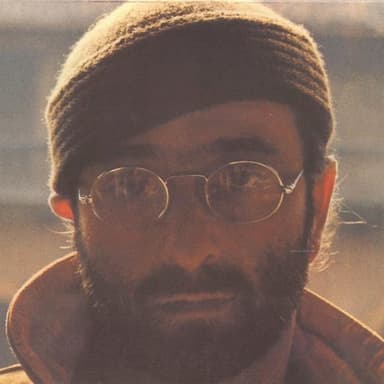
Cosa sarà
Lucio Dalla
There is a philosophic stillness at the centre of this song — a willingness to sit with not-knowing that most pop music actively refuses. The arrangement moves slowly, the chords resolving in ways that feel like questions rather than answers, and Dalla's voice inhabits a register of genuine uncertainty rather than performed angst. When the song was recorded with Francesco De Gregori, the dual-voice structure added another dimension: two different timbres circling the same unanswerable subject, their voices sometimes harmonising and sometimes diverging, which enacts rather than merely describes the ambivalence at the song's heart. Even in solo versions, there is that quality of dialogue — as if Dalla is arguing gently with himself. The instrumentation leans on piano and strings in a way that is restrained rather than lush, providing texture without overstatement, keeping the focus on the lyric's core meditation on the future and its essential unknowability. This is a song about the gap between intention and outcome, about the strange courage required to move forward without guarantees. It sits within the early 1970s Italian singer-songwriter tradition but has aged better than many of its contemporaries because its emotional subject — what will become of us — does not date. You listen to this at transition points: finishing something, beginning something, standing at the edge of a decision whose consequences you cannot yet see.
slow
1970s
sparse, quiet, meditative
Italian singer-songwriter tradition
Folk, Pop. Italian cantautorato.
pensive, melancholic. Circles a central uncertainty without resolution, the emotion deepening but never arriving, sustaining philosophical openness as its final statement..
energy 2. slow. danceability 1. valence 4.
vocals: contemplative male voice, gentle, philosophical, dialogue-like in texture.
production: piano, restrained strings, minimal meditative arrangement, lyric-focused.
texture: sparse, quiet, meditative. acousticness 6.
era: 1970s. Italian singer-songwriter tradition.
At transition points — finishing something, beginning something, standing at the edge of a decision whose consequences you cannot yet see.