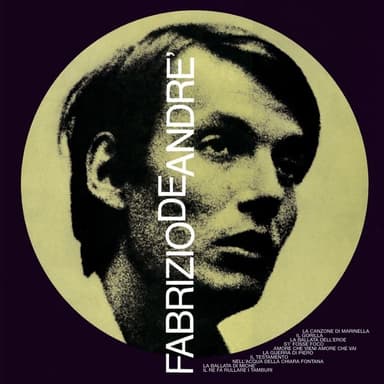
Amore che vieni, amore che vai
Fabrizio De André
This is a young man's song dressed in the clothes of resignation, and the tension between those two things is where all its beauty lives. The guitar is gentle, almost conversational, with a rhythmic pulse that suggests walking — movement through landscape, through time, through the accumulation of loves that arrive and then leave without ceremony. De André's voice here carries something softer than on his later work, an almost boyish clarity that makes the philosophical acceptance of the lyrics land harder by contrast: this is not a man who has stopped feeling, but one who has learned to hold feeling loosely. The melody has a folk simplicity that places it squarely in the Italian cantautore tradition of the mid-1960s, when singer-songwriters were beginning to treat popular song as a vehicle for genuine poetry. The emotional register is bittersweet without tipping into sentimentality — there's a shrug built into the music itself, an acknowledgment that love's impermanence is not a tragedy but simply the condition of being alive. You listen to this in the afternoon, on a long train ride through countryside, watching the light change and thinking about someone you loved briefly and completely and then let go without entirely understanding why.
slow
1960s
warm, gentle, unhurried
Italian cantautore tradition, mid-1960s
Folk, Italian Folk. Italian cantautore.
bittersweet, nostalgic. Opens in youthful feeling and softly settles into philosophical acceptance of love's impermanence, treating transience as condition rather than tragedy..
energy 3. slow. danceability 2. valence 5.
vocals: soft male voice, boyish clarity, gentle, philosophically understated.
production: acoustic guitar, conversational, folk, light rhythmic walking pulse.
texture: warm, gentle, unhurried. acousticness 9.
era: 1960s. Italian cantautore tradition, mid-1960s.
A long afternoon train ride through countryside, watching the light change and thinking about someone you loved briefly and then let go.