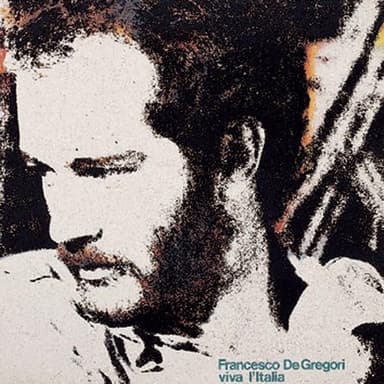
Viva l'Italia
Francesco De Gregori
The title arrives like a toast and a lament at once, and the song never stops being both. Piano anchors the arrangement — not jazz-soft, but declaratory, slightly off-center, landing chords that feel simultaneously proud and broken. The production has a warmth that keeps the irony from curdling into cynicism; strings appear in waves, swelling just enough to suggest grandeur before the melody undercuts them. De Gregori catalogs Italy's contradictions — its beauty and its corruption, its ancient grace and its chronic self-defeat — not through argument but through accumulation, image stacked on image until the picture becomes overwhelming and somehow familiar. His voice here is at its most bardic: clear, slightly theatrical, carrying a weight of love that refuses to become sentimentality. The emotional landscape is genuinely complex — you feel pride and shame in the same breath, affection for a country that has never quite lived up to itself. Culturally, the song arrived at a moment when Italy was digesting political violence, economic anxiety, and the erosion of civic faith, and it became a kind of secular anthem, sung at protests and concerts alike — claimed by people with opposing politics because its ambiguity was its truth. This is a song for long train rides through the Italian countryside, watching the landscape scroll past and feeling something unnameable about belonging to a place.
slow
1970s
warm, layered, grandly restrained
Italian, civic folk tradition, post-anni di piombo
Folk, Cantautorato. Political folk.
bittersweet, nostalgic. Arrives as both toast and lament simultaneously and never stops being either, accumulating contradictory images of pride and shame until the feeling becomes overwhelming and familiar..
energy 4. slow. danceability 2. valence 4.
vocals: bardic male, clear, slightly theatrical, love-weighted.
production: declaratory piano, swelling strings, warm, grand.
texture: warm, layered, grandly restrained. acousticness 7.
era: 1970s. Italian, civic folk tradition, post-anni di piombo.
Long train rides through the Italian countryside, watching the landscape scroll past and feeling something unnameable about belonging to a place.