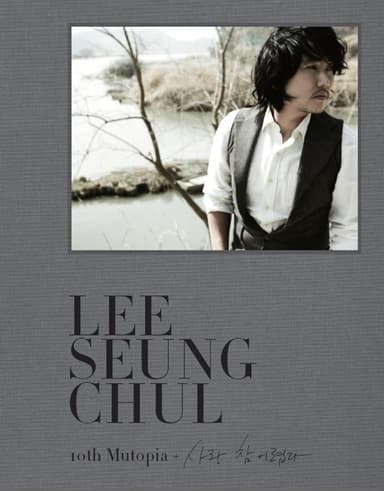
사랑하니까
이승철
There is a particular kind of Korean ballad that seems to exist solely to hold sorrow with dignity, and Lee Seung-cheol's voice was built for exactly that purpose. "사랑하니까" opens with a spare piano line and string arrangement that unfurls slowly, almost reluctantly, as though the music itself is hesitant to arrive at the moment of feeling. Seung-cheol's tenor carries a warm, rounded resonance in its lower register before expanding upward with a controlled ache that never tips into melodrama. The production is classic mid-1990s Korean balladry — lush but not overloaded, orchestral strings providing a cushion beneath the melody rather than overwhelming it. The emotional core of the song is paradoxical: the act of loving someone used as justification for enduring something painful, the idea that devotion itself becomes the reason to stay in difficulty. There is no bitterness here, only a measured, almost noble suffering. The mood doesn't shift dramatically; it deepens, like a room slowly filling with dusk. This is music for the kind of private grief that has no audience — a commute home after a difficult phone call, a rainy evening sitting by a window. For a generation of Koreans who grew up with Lee Seung-cheol as a permanent fixture of the cultural landscape, this song functions almost as emotional shorthand for love as sacrifice.
slow
1990s
lush, warm, muted
South Korea, mid-1990s ballad era
Ballad, K-Pop. Korean Ballad.
melancholic, romantic. Unfurls slowly from sparse restraint into a deepening sorrow that never seeks catharsis — the emotion fills the room like dusk, dignified and without bitterness..
energy 2. slow. danceability 1. valence 2.
vocals: warm rounded male tenor, controlled ache, expands upward without melodrama.
production: spare piano, orchestral strings cushion, classic mid-90s Korean ballad production.
texture: lush, warm, muted. acousticness 5.
era: 1990s. South Korea, mid-1990s ballad era.
Commute home after a difficult phone call, or a rainy evening sitting by a window with private grief.