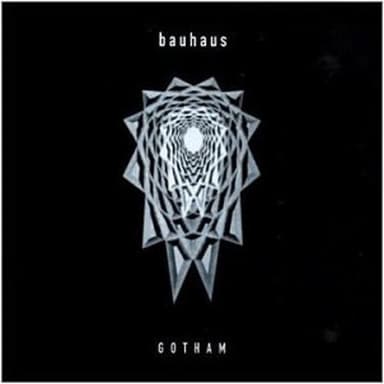
Bela Lugosi's Dead
Bauhaus
Nine minutes and thirty-eight seconds — and it earns every one of them. The bass enters alone, a deep sepulchral throb that seems to materialize from absolute silence, and from that single note an entire gothic universe slowly assembles itself. Daniel Ash's guitar doesn't play chords so much as haunt the spaces between them — brittle single notes, reverb-drenched and skeletal, circling around the bass like moths around a flame that never quite flares. Peter Murphy's voice doesn't arrive as much as it intones, a baritone proclamation that lands somewhere between liturgy and theatre. The subject is undeath — specifically the undeath of the cinematic vampire, that figure of unending night and sexual terror — but what the song really conjures is atmosphere as pure sensation: cold stone, candlelight, the weight of centuries pressing down on a single moment. It was recorded in one take as a B-side, which gives it an almost accidental grandeur, a sense of something summoned rather than composed. The repetition is the point — the loop of the bass, the unchanging tempo, the refrain that keeps returning like a figure circling a tomb — because obsession and undeath both share that quality of cyclical return. This is the foundational text of goth music, the song that named and defined an entire aesthetic. Play it alone, late, in a room with the lights very low.
slow
1980s
dark, cavernous, skeletal
British gothic post-punk
Gothic Rock, Post-Punk. Gothic Rock.
haunting, ominous. Materializes from silence with a single bass note and slowly assembles a gothic universe that never resolves, sustaining dread through cyclical repetition..
energy 3. slow. danceability 3. valence 2.
vocals: baritone male, liturgical, theatrical, declamatory intoning.
production: deep sepulchral bass, reverb-drenched skeletal guitar, cavernous space, sparse arrangement.
texture: dark, cavernous, skeletal. acousticness 3.
era: 1980s. British gothic post-punk.
Alone, very late at night in a room with the lights turned very low.