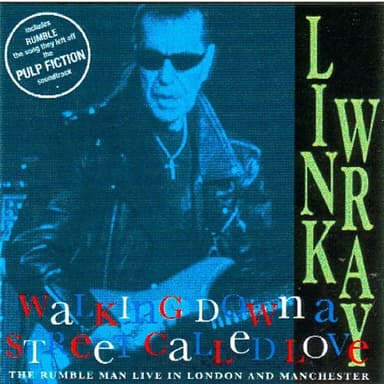
Rumble
Link Wray
There is a sound that precedes language — something that lives in the body before the brain can name it. "Rumble" is that sound. Link Wray's 1958 instrumental is built on a single, lurching guitar riff that moves less like music and more like weather: dark, pressurized, inevitable. The guitar tone is deliberately ugly, pushed through a punctured speaker cone into something that buzzes and snarls rather than rings. The tempo is a slow, menacing swagger, not quite a march but close — the kind of pace a person keeps when they're not in a hurry because they know the outcome. There are no vocals, and none are needed. The absence of a singer makes the guitar the only voice, and it speaks in pure threat. Drums and bass lock in with minimal variation, creating a hypnotic, almost ritualistic groove. This is the song that invented distortion as an attitude rather than an accident, and it was banned from radio stations who worried it would incite gang violence — a reaction that tells you everything about how viscerally it communicates danger. You reach for "Rumble" not when you're angry but when you need to feel like the kind of person anger cannot touch.
slow
1950s
buzzing, dark, snarling
American rock and roll, inventor of distortion as attitude
Rock. Proto-Punk.
menacing, dark. Maintains constant dark pressure from first note to last without relief or release, pure sustained menace..
energy 7. slow. danceability 4. valence 3.
vocals: no vocals, instrumental.
production: distorted guitar through punctured speaker, minimal bass and drums, no studio polish.
texture: buzzing, dark, snarling. acousticness 2.
era: 1950s. American rock and roll, inventor of distortion as attitude.
When you need to feel like the kind of person anger cannot touch.