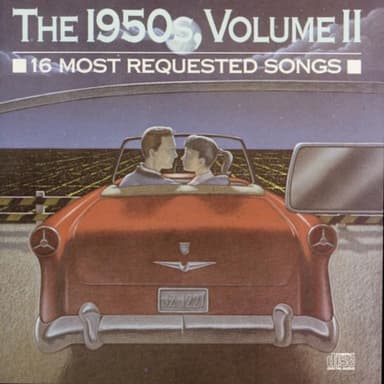
It's Not for Me to Say
Johnny Mathis
"It's Not for Me to Say" is built on restraint, and the restraint is the point. Where many ballads of its era worked by accumulation — more strings, more volume, more ornament — this one gains its power by refusing to push. The orchestra moves beneath Mathis with the patience of deep water, cushioning rather than propelling, and the result is a song that feels like it exists slightly outside of time. Mathis's voice carries a quality that is difficult to name precisely: there is warmth in it, yes, but also a kind of courtly diffidence, a willingness to place the other person's emotional reality above his own declaration. The lyric navigates the ethics of early love with genuine delicacy — acknowledging what can and cannot be said before a relationship has defined itself, honoring the process of becoming rather than rushing toward conclusion. Mathis phrases each line as if the words themselves are fragile, turning them carefully, not rushing the end of a thought. It appeared in a 1957 film and has that quality of early Hollywood romanticism — emotionally earnest in a way that contemporary culture sometimes reads as naïve but which actually requires considerable artistry to sustain without becoming saccharine. This is music for the moment just before something becomes official, when anticipation is still richer than certainty, and you are both aware of standing at the edge of something that will change the ordinary shape of your days.
slow
1950s
delicate, warm, refined
American Hollywood romanticism, early film-adjacent pop songwriting
Pop, Easy Listening. Traditional Vocal Pop.
tender, wistful. Maintains perfect, patient restraint throughout — honoring the fragile ethics of love not yet declared, the emotion deepening through what is withheld rather than expressed..
energy 2. slow. danceability 1. valence 6.
vocals: light male tenor, courtly, diffident, phrases held like fragile objects.
production: cushioning orchestra, patient strings, no aggressive swells, arrangement as emotional support.
texture: delicate, warm, refined. acousticness 3.
era: 1950s. American Hollywood romanticism, early film-adjacent pop songwriting.
The moment just before a relationship becomes official, when you're both aware of standing at the edge of something that will change the ordinary shape of your days.