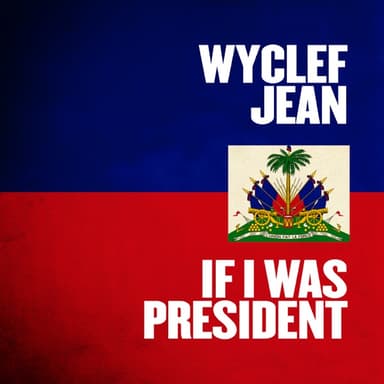
If I Was President
Wyclef Jean
Wyclef Jean's "If I Was President" opens in a stripped, searching acoustic space — a guitar figure that feels less like a groove and more like a question being turned over slowly in the hands. The production is deliberately spare for much of its runtime, building atmosphere through absence before the track opens up into something more anthemic. Wyclef's voice here operates differently than his more commercially polished work: rawer, more confessional, the Creole and English blurring together with the naturalness of someone whose inner life moves between languages. He embodies a kind of frustrated idealism — the anger is present but it is organized anger, the kind that has been sitting with injustice long enough to articulate it clearly. The lyric traces the distance between political power and lived reality, asking what a leader who came from poverty would actually prioritize, and the specificity grounds what could have been hollow speechifying. The song draws on the gospel and protest traditions of the African diaspora while filtering them through the hip-hop consciousness of the early 2000s. It belongs to the tradition of politically engaged Caribbean diaspora music — Wyclef the Haitian-American speaking to and from the margins. You reach for this on a day when the news has left you hollow, when you need music that shares your frustration without surrendering to despair.
slow
2000s
raw, searching, open
Haitian-American diaspora, African diaspora gospel and protest tradition filtered through hip-hop
Hip-Hop, Folk. conscious hip-hop protest song.
melancholic, defiant. Begins in sparse, searching frustration and builds through organized anger toward something anthemic — not surrender to despair but a clear-eyed articulation of injustice that leaves the listener with frustrated idealism intact..
energy 5. slow. danceability 3. valence 4.
vocals: raw confessional male, Creole and English blurring naturally, more vulnerable than commercial polish.
production: stripped acoustic guitar, sparse arrangement opening into anthemic space, deliberately restrained.
texture: raw, searching, open. acousticness 6.
era: 2000s. Haitian-American diaspora, African diaspora gospel and protest tradition filtered through hip-hop.
A day when the news has left you hollow and you need music that shares your frustration without surrendering to despair.