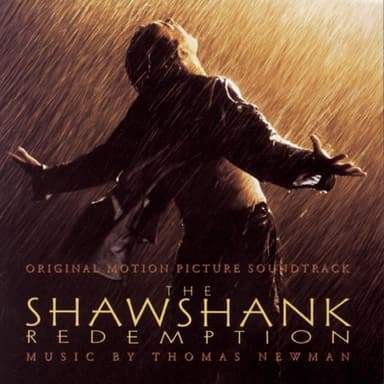
Brooks Was Here (The Shawshank Redemption)
Thomas Newman
This is among the most quietly devastating pieces in the Shawshank score — perhaps in Newman's entire catalogue. The instrumentation is sparse almost to the point of austerity: piano, a thin string voice, and the kind of silence that weighs something. The tempo is slow enough to feel like it's bearing a load. What Newman accomplishes here is the musical rendering of a specific kind of grief — not the loud, collapsing kind, but the grief that settles in an old man who has outlived the context that gave his life meaning. The harmonic language is gentle but unresolved, ending phrases on notes that don't quite close, the musical equivalent of a sentence that trails off. The emotional landscape is one of profound dislocation — belonging to a world that no longer exists, being physically present in a world where you are invisible. There's no melodrama here, no attempt to make this larger than it is; the smallness is entirely the point. You would find this piece fitting in those private moments of recognizing your own obsolescence, or when sitting with the irreversibility of time, wanting music that doesn't try to console you but simply agrees that yes, this is how it feels.
very slow
1990s
sparse, austere, weightful
American, character-driven cinematic
Soundtrack, Classical. Film Score.
melancholic, somber. Slow and load-bearing from the start, phrases trailing off unresolved, rendering grief that never collapses but simply endures..
energy 1. very slow. danceability 1. valence 1.
vocals: instrumental, no vocals.
production: austere piano, thin string voice, deliberate silence, unresolved harmony.
texture: sparse, austere, weightful. acousticness 9.
era: 1990s. American, character-driven cinematic.
Private moments of recognizing your own obsolescence, wanting music that doesn't console but simply agrees.