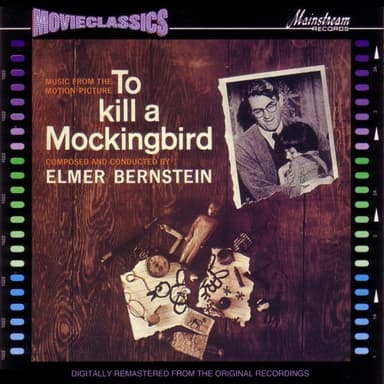
To Kill a Mockingbird Theme (To Kill a Mockingbird)
Elmer Bernstein
Where the previous score commanded the horizon, this one inhabits the shade of a porch on a hot Southern afternoon. Muted strings carry the melody with a hesitance that feels like a child watching the adult world and not quite understanding its cruelty yet. Bernstein's writing here is chamber-like — intimate, careful, never swelling into triumph because the story doesn't permit triumph, only endurance and the fragile warmth of decency. There is a recurring figure in the theme that circles back on itself, like memory returning to a place before understanding arrived. The solo guitar threads through the orchestration like a voice that has chosen quietness over loudness. Emotionally it evokes something between tenderness and grief — not the sudden grief of loss but the slow grief of realizing the world is unjust and beautiful simultaneously. You listen to this on a late summer evening when the heat has softened and you're thinking about integrity, about what your father or someone like him stood for. It carries the weight of American conscience without grandstanding about it.
slow
1960s
intimate, soft, warm
American Hollywood film score, American South, conscience tradition
Film Score, Classical. chamber orchestral, drama film score.
tender, melancholic. Opens with hesitant muted strings as if watching the world without understanding it yet, circles back on itself like memory, and settles into quiet grief without ever reaching triumph..
energy 2. slow. danceability 1. valence 4.
vocals: none — solo guitar threads through like a voice choosing quietness.
production: muted strings, solo guitar, chamber-scale orchestration, deliberately restrained and intimate.
texture: intimate, soft, warm. acousticness 9.
era: 1960s. American Hollywood film score, American South, conscience tradition.
Late summer evening when the heat has softened and you are thinking about integrity — about what someone you admired stood for and what it cost them.