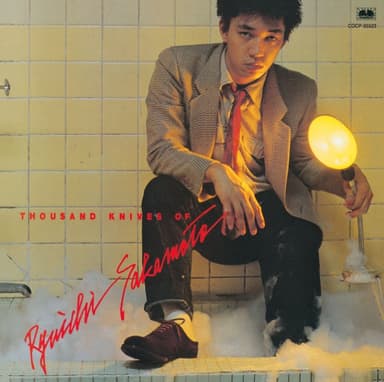
Thousand Knives (Thousand Knives)
Ryuichi Sakamoto
This is Sakamoto at his most confrontational — a propulsive, almost angry piece from 1978 that announced the synthesizer not as mood device but as weapon. The opening is abrupt and declarative: sequenced synthesizer patterns layered at jagged angles, a rhythm that feels both mechanical and urgent, as if a machine had developed grievances. Where much electronic music of the era was smooth and utopian, *Thousand Knives* was deliberately unsettling — the title is not metaphor but instruction. Sakamoto was responding to the Japanese political landscape of the late 1970s, and the rage encoded in the track is specific, not decorative. The texture throughout is dense and confrontational: analog synthesizers stacked against each other in dissonance, a bass line that pushes rather than grooves. Yet there is compositional intelligence beneath the aggression — this is structured provocation, not chaos. It belongs to the lineage of electronic music as political statement, alongside early industrial and post-punk. You play it when you need music that doesn't comfort you, that matches a particular kind of restless, principled fury.
fast
1970s
dense, abrasive, confrontational
Japanese, political electronic music tradition
Electronic. Avant-garde Synth / Proto-Industrial.
aggressive, anxious. Launches immediately into confrontational intensity and sustains structured, principled fury without resolution or release..
energy 8. fast. danceability 5. valence 3.
vocals: instrumental, no vocals.
production: stacked analog synthesizers, sequenced patterns, jagged dissonance, driving bass line.
texture: dense, abrasive, confrontational. acousticness 1.
era: 1970s. Japanese, political electronic music tradition.
When you need music that matches a restless, principled fury and refuses to comfort you.