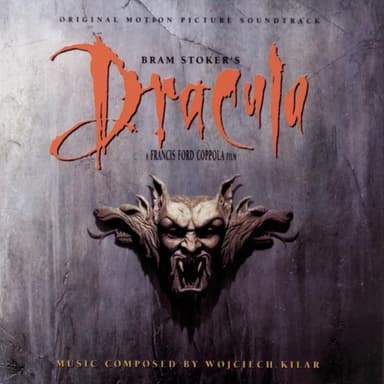
Bram Stoker's Dracula (Bram Stoker's Dracula)
Wojciech Kilar
Kilar builds his central theme from a single obsessive idea — a low, churning string figure that climbs and climbs without ever quite releasing, like something sealed underground straining toward the surface. The brass writing is ecclesiastical in origin but perverted in application: what might have been a hymn is stretched into something predatory. The choir, when it enters, doesn't sing so much as intone — human voices processed into something barely human, breath and pitch blurring together into an incantatory mass. The production has a theatrical grandeur that recalls Romantic opera while remaining unmistakably cinematic, each gesture bigger than the last, dynamics swinging between sepulchral silence and orchestral eruption. Emotionally, this is music of seduction and dread in equal measure — Kilar understood that Dracula is a love story as much as a horror film, and his score holds both impulses simultaneously. There is desire in the string melody, danger in the brass, and a kind of terrible beauty in the way they intertwine. The cultural context is Eastern European Gothic filtered through Hollywood spectacle, Kilar bringing his Polish sensibility to a story rooted in Victorian anxieties about foreign invasion and erotic threat. Listen to this at night when the boundary between want and fear seems thinner than usual.
slow
1990s
dense, dark, opulent
Eastern European Gothic / Hollywood Romantic orchestral
Soundtrack, Orchestral. Gothic Romantic Film Score.
menacing, romantic. Begins in churning, sealed dread and swings between predatory grandeur and seductive beauty, holding both simultaneously without resolving either..
energy 7. slow. danceability 2. valence 3.
vocals: choir ensemble, incantatory, barely human, breath and pitch blurred.
production: churning strings, ecclesiastical brass, processed choir, operatic dynamics, theatrical orchestration.
texture: dense, dark, opulent. acousticness 4.
era: 1990s. Eastern European Gothic / Hollywood Romantic orchestral.
Late night when the boundary between desire and dread feels unusually thin.