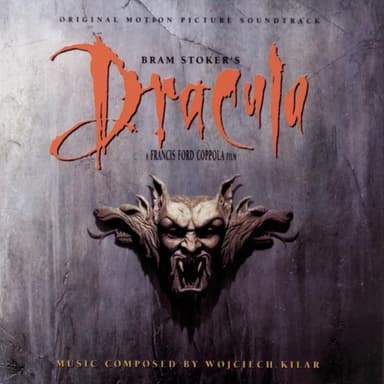
Love Song for the Vampire (Bram Stoker's Dracula)
Wojciech Kilar
There is a darkness here that does not announce itself with fanfare — it seeps in through the low strings like cold fog rolling across a moor. Kilar builds the score for Coppola's gothic romance with Eastern European folk blood running beneath the orchestral surface, a reminder that Dracula is not a British invention but a creature of the Carpathians. The love theme aches with an almost unbearable tenderness, strings swelling and retreating in waves that feel simultaneously ancient and swooning, as though centuries of longing have been compressed into a few minutes of music. There is no malevolence here, only desire distorted by time and immortality into something that rhymes with grief. The choir, when it appears, hovers rather than soars — voices that belong to no specific tradition yet sound like all of them at once, liturgical and pagan in the same breath. The tempo breathes slowly, luxuriously, the way someone breathes who has all of eternity and nothing left to lose. This is music for watching the sun set from a great height, for the particular ache of wanting something you know will destroy you. Kilar understood that the film's tragedy is not horror but romance gone wrong across centuries, and he scored it accordingly — with beauty that cuts.
slow
1990s
dark, lush, ancient
Polish/Carpathian, Hollywood gothic cinema
Classical, Film Score. Gothic Romance Score.
melancholic, romantic. Begins with cold, seeping dread and slowly opens into unbearable tenderness, centuries of longing collapsing into beauty that cuts..
energy 3. slow. danceability 1. valence 3.
vocals: ethereal choir, liturgical yet pagan, hovering and ancient.
production: full orchestra, massed strings, choir, Eastern European folk undercurrent.
texture: dark, lush, ancient. acousticness 8.
era: 1990s. Polish/Carpathian, Hollywood gothic cinema.
Watching the sun set from a great height when desire and grief feel indistinguishable, wanting something you know will destroy you.