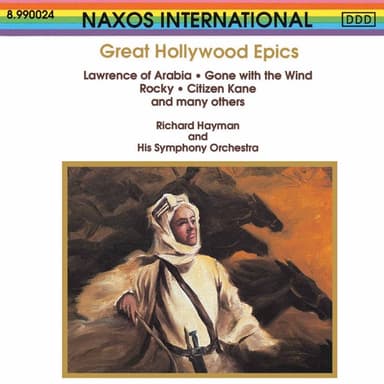
Citizen Kane Suite (Citizen Kane)
Bernard Herrmann
Herrmann's approach here is the opposite of sentimentality — angular, harmonically restless, built from fragments that accumulate rather than resolve. The suite draws from cues written for a film about the architecture of memory and power, and the music itself feels architecturally designed: each section fitted to the next with precise structural intention rather than romantic flow. The brass writing is hard-edged and cold, cutting through the orchestral texture with the clarity of a statement of fact. There are moments of grand ceremonial sweep — music for a man who imagined himself larger than life — that Herrmann undercuts with unease, a dissonance that lives just beneath the surface. It is music that understands its subject's contradiction: the emptiness inside the spectacle. Harmonically it anticipates a more dissonant, psychologically probing approach to film music that Herrmann would develop further throughout his career. It rewards careful listening in a quiet room, demanding the same attention the film demands, refusing to be background to anything.
medium
1940s
cold, angular, dense
American Hollywood, European Modernist tradition
Classical, Film Score. Modernist Orchestral.
anxious, melancholic. Moves through angular, harmonically restless fragments that accumulate tension without resolving, undercutting grand ceremonial gestures with persistent underlying unease..
energy 5. medium. danceability 1. valence 3.
vocals: instrumental only.
production: hard-edged brass, dissonant harmonics, precise structural orchestration, full ensemble.
texture: cold, angular, dense. acousticness 8.
era: 1940s. American Hollywood, European Modernist tradition.
Quiet room demanding full attention, for contemplating contradiction between outward spectacle and inner emptiness.