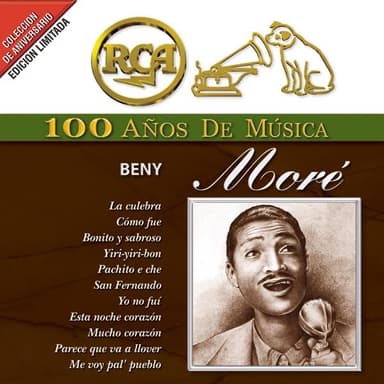
Mambo No. 5
Benny Moré
The brass section doesn't so much enter as erupt — a cascading volley of trumpets and trombones that announces itself like a street parade rounding a corner at full tilt. Benny Moré's original "Mambo No. 5" is a showcase of mambo architecture at its most exhilarating: the rhythm section locks into a relentless forward momentum while the horns trade phrases in call-and-response bursts, each answering the other with increasing intensity. Moré's voice sits inside the arrangement rather than on top of it, relaxed and conversational, as though he's narrating a scene he finds genuinely amusing. The song captures the electric atmosphere of 1950s Havana ballrooms — the Tropicana, the Sans Souci — where musicians played for audiences who danced as seriously as athletes compete. There's a masculine swagger to the whole thing, an absolute certainty of rhythm, without a single moment of hesitation or softness. The clave pattern underneath everything acts as a heartbeat that refuses to be rushed or slowed. This is music for the physical body first and the intellect second, designed to make standing still feel like a personal failure. It belongs at volume, in a room with other people, preferably late at night when the inhibitions have loosened and the floor is already moving.
very fast
1950s
bright, dense, explosive
Cuban, Havana ballroom culture, Tropicana era
Latin, Jazz. Mambo.
euphoric, aggressive. Erupts with full-force energy from the first note and sustains a relentless, swaggering momentum to the end..
energy 10. very fast. danceability 10. valence 9.
vocals: relaxed male tenor, conversational, assured, sits inside the arrangement.
production: full brass section, trumpets, trombones, clave, driving rhythm section, call-and-response horns.
texture: bright, dense, explosive. acousticness 1.
era: 1950s. Cuban, Havana ballroom culture, Tropicana era.
At volume, in a room full of people late at night when inhibitions have loosened and the floor is already moving.