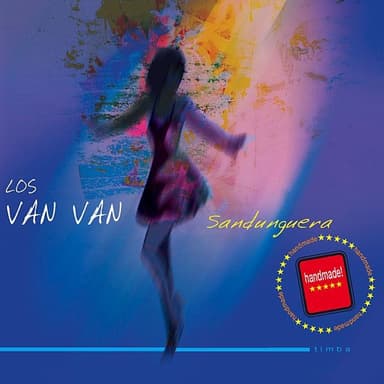
La Habana No Aguanta Más
Los Van Van
A city can be a character in a song, and here Havana is drawn with the specificity of someone who loves a place so deeply they can catalog its flaws without softening them. The arrangement pulses with urban urgency — the rhythm section is tighter, more compressed than a pure dance track, suggesting streets rather than ballrooms, bodies pressed together in heat rather than spinning in open space. There is a collective restlessness in the brass lines, phrases that rise with frustration before the percussion pulls them back into the groove, as if the music itself is enacting the tension between chaos and resilience that defines the city. The vocalist sings with the intimacy of a neighbor leaning over a fence, conversational and immediate, and the lyrics circle around overcrowding, heat, love, and the peculiar exhaustion of a place where everything happens at once. Sonically the song sits in a particular late-night register — not melancholic exactly, but aware of the weight of living. It is the kind of music that makes sense blasting from an open window, becoming part of the ambient noise it's commenting on. Listen to it when you're thinking about a place you've outgrown or that has outgrown you, somewhere you can't quite leave behind even when you're no longer there.
medium
1990s
warm, dense, urban
Cuban, Havana
Timba, Cuban. Urban Timba.
restless, melancholic. Cycles between frustration and resilience without resolving either, the music enacting the tension of a city that exhausts and refuses to release..
energy 7. medium. danceability 8. valence 5.
vocals: conversational male, intimate, neighborly, street-level direct.
production: compressed rhythm section, brass lines testing a groove, bass, tumbadora.
texture: warm, dense, urban. acousticness 2.
era: 1990s. Cuban, Havana.
Late night when you're thinking about a place you've outgrown but still can't quite leave behind.