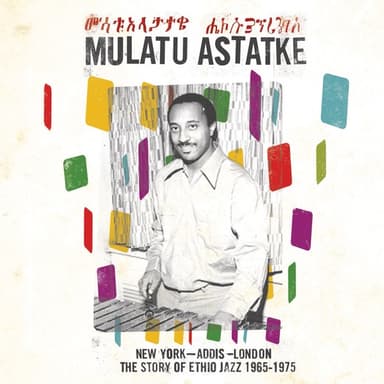
Dewel
Mulatu Astatke
"Dewel" opens with a percussion groove that feels ceremonial without being solemn — a rolling, interlocking rhythm that suggests communal ritual more than individual expression. The bass anchors everything with a heavy, earthy presence while Astatke's organ weaves through the harmonic space with a tone that is simultaneously sacred and deeply funky, like church music that has wandered into a late-night club and found the combination unexpectedly revelatory. The melodic material draws from traditional Ethiopian scales, giving the song an unmistakable modal quality — intervals that sound slightly unexpected to ears trained on Western tonality, bending the familiar into something that feels older and more elemental. There are moments where the arrangement opens up and breathes, where individual instruments step forward before folding back into the collective texture, creating a sense of conversation rather than hierarchy. This is music that understands time differently than most jazz — it isn't in a hurry to develop themes or build to climaxes; it is content to inhabit a groove and let that groove reveal its depths gradually. The overall effect is deeply physical in a way that is distinct from straightforward dance music, more like the rhythmic sway of a long procession than the sharp impulse to move a specific way. It rewards patient listening in a darkened room, perhaps with headphones, attention given fully.
medium
1970s
earthy, dense, hypnotic
Ethiopian / Ethio-jazz
Jazz, World. Ethio-jazz / Afrobeat-adjacent.
serene, euphoric. Opens ceremonially and slowly reveals its depths — communal energy builds not to a climax but to a deeper settling into the groove..
energy 6. medium. danceability 7. valence 6.
vocals: instrumental.
production: organ, bass, interlocking percussion, jazz horns, earthy modal harmony.
texture: earthy, dense, hypnotic. acousticness 5.
era: 1970s. Ethiopian / Ethio-jazz.
Listening with headphones in a darkened room, giving full attention to music that rewards patience.