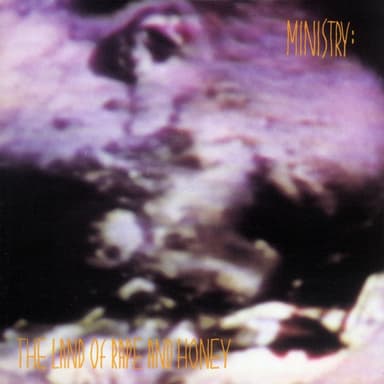
Stigmata
Ministry
The opening assault is textbook shock doctrine — a pneumatic drill of distorted guitar riffs hammered against a drum machine locked into a relentless, mechanized pulse. There is no warmup, no invitation. The production here feels deliberately suffocating, layering industrial noise over itself until the sonic mass becomes almost physical, something you feel against your sternum rather than hear through speakers. Al Jourgensen's vocals arrive processed beyond recognition in places, a snarl dragged through a shredder, conveying not so much words as raw contempt. The song draws on the iconography of religious suffering — wounds, martyrdom, the body as contested territory — but repurposes it as critique, as if to say that systemic violence leaves marks as surely as nails. This was Ministry shedding their early synth-pop skin entirely and planting a flag in a harder, uglier territory they would claim as their own. The song belongs to the late-Reagan twilight, when American aggression wore a suit and smiled, and industrial music offered the closest sonic equivalent to honest documentation. You reach for this one when you want something that doesn't soften the edges, when the commute feels like a cattle chute and you want the music to name that feeling without metaphor.
fast
1980s
suffocating, abrasive, crushing
American industrial metal, Chicago
Industrial, Metal. industrial metal.
aggressive, defiant. Arrives at full intensity with no warmup and sustains unrelenting assault throughout, using religious iconography as political critique without ever softening into nuance..
energy 10. fast. danceability 4. valence 2.
vocals: processed male snarl, heavily distorted, conveying contempt beyond language.
production: pneumatic distorted guitars, mechanized drum machine, suffocating layered noise.
texture: suffocating, abrasive, crushing. acousticness 1.
era: 1980s. American industrial metal, Chicago.
A grinding commute that feels dehumanizing — when you want music that names the feeling of being processed rather than living.