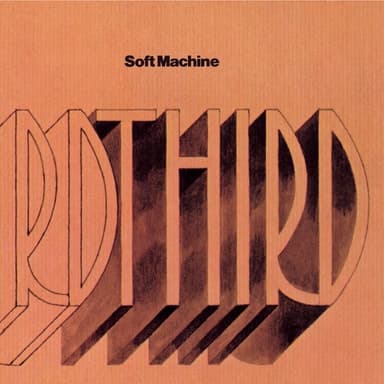
Out-Bloody-Rageous
Soft Machine
Nearly twenty minutes of sustained argument between an organ drone and the question of whether jazz-rock can become genuinely abstract without losing its pulse. "Out-Bloody-Rageous" opens with Ratledge sustaining a sound that sits between a mechanical hum and something almost liturgical — cool, even hostile in its refusal to resolve — and then builds in archaeological layers, each addition changing the meaning of what was already there. The texture thickens with deliberate patience, and when Dean's saxello eventually enters, it doesn't break the tension so much as demonstrate that the tension was always the point. Wyatt's voice appears briefly, wordlessly, and it humanizes the piece in a way that makes the surrounding machinery feel more lonely by contrast. This is the sound of British jazz-rock at its most European and least compromising — intellectually serious, almost uncomfortable in its refusal to swing in any reassuring way, belonging to a precise window between psychedelia and what would later be called prog, when ambitious musicians believed the studio itself was an instrument. You reach for it when you want music that demands your full attention and offers nothing like comfort in return, only the strange satisfaction of something rigorous holding together.
slow
1970s
cold, dense, abstract
British, European jazz-rock
Jazz, Progressive Rock. Canterbury Scene / Jazz-Rock Fusion.
cerebral, austere. Opens with cold mechanical stillness and builds in patient layers of tension that never releases, arriving instead at a kind of rigorous exhaustion..
energy 4. slow. danceability 2. valence 3.
vocals: wordless male voice, brief, humanizing amid abstraction.
production: organ drone, saxello, layered studio construction, European minimalism.
texture: cold, dense, abstract. acousticness 4.
era: 1970s. British, European jazz-rock.
Full-attention late-night listening in the dark when you want music that demands engagement and offers rigor over comfort.