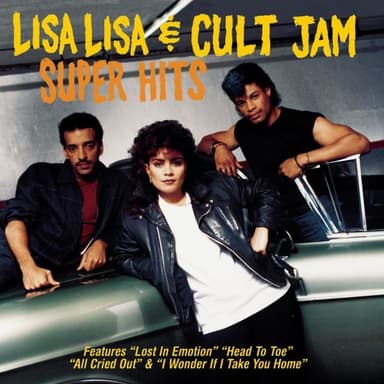
All Cried Out
Lisa Lisa & Cult Jam
Where the first Lisa Lisa hit arrives like a punch, this one lands like a slow collapse. Built around a pillowy mid-tempo groove, the production wraps the listener in a kind of luxurious melancholy — synthesizer pads that feel like early-morning light through half-closed blinds, bass lines that roll forward with patient inevitability. Full Force understood that heartbreak requires comfort even as it destroys, and the arrangement reflects that contradiction: everything is lush and polished while the emotional content is raw and unraveling. Lisa Lisa's voice here is her most exposed — the controlled confidence that defines her club work gives way to something more fragile and searching, a delivery that sits at the precise edge between composure and dissolution. The core of the song is a meditation on emotional exhaustion, the particular desolation of having spent every reserve of grief and arriving at a strange, hollow stillness. It's not anger, not weeping — it's the eerie calm after both have passed. The song belongs squarely in the mid-eighties freestyle tradition, when New York's Latin-influenced dance pop was learning to hold genuine tenderness inside its glossy surfaces. This is a slow-dance song for the end of the night, when the crowd has thinned and someone is sitting alone at a table realizing a relationship is finally, irreversibly over.
slow
1980s
lush, warm, melancholic
New York, Latin-influenced dance pop
R&B, Pop. Freestyle.
melancholic, nostalgic. Begins in quiet devastation and moves toward hollow stillness, the eerie calm after all grief has been exhausted..
energy 4. slow. danceability 4. valence 3.
vocals: expressive female, fragile edge, emotionally raw, controlled vulnerability.
production: synthesizer pads, rolling bass line, lush polished arrangement, Full Force studio gloss.
texture: lush, warm, melancholic. acousticness 2.
era: 1980s. New York, Latin-influenced dance pop.
Late night when a relationship has just ended and the numbness is setting in.